MYD’s Position Statement on Rebranding of MEWA

This position statement was written to persuade the Ministry of Environment and Water to consider adopting the term ‘climate change’ in its rebranding process.

On the 3rd of April, Malaysiakini published an article stating that the Ministry of Environment and Water (MEWA) is still undergoing a rebranding process. The Malaysian Youth Delegation (MYD) presents this statement to appeal to the Ministry to add the term ‘climate change’ in addition to the term ‘environment’ in the Ministry’s new name.

The term ‘environment’ encompasses issues within the spectrum of the natural world which includes land, water, forestry, waste management, air quality, pollution and others. Departing from that, however, the term ‘climate change’ distinctively signifies the dangerous and accelerated rise in global temperature caused by the emission of greenhouse gases. This term has since gained its own magnitude and preference among the international climate change advocacy network since the founding of the Intergovernmental Panel on Climate Change (IPCC) in 1988. In short, the terms ‘climate change’ and ‘environment’ are no longer simply interchangeable in today’s state of affairs.

Climate change affects many sectors worldwide including agriculture, fisheries, livestock, forestry, tourism, food, energy and health. The effects of climate change also threaten the collapse of ecosystems, extinction of animal species and the natural world. In relation to this, a Merdeka Centre survey in 2016 stated that a significant number of Malaysians (81%) are concerned about climate change and dissatisfied with the government’s efforts in managing it.

In brief, we believe in the significance of including the term ‘climate change’ in the name of the Ministry for the following reasons:

1. Having the term ‘climate change’ in the Ministry’s nomenclature would signify its mandate to address climate change, in line with Malaysia’s commitment in conventions and resolutions that it had signed or ratified which include the term climate change:

  • UN Framework Convention on Climate Change (UNFCCC). Entered into force 1994, signed by Malaysia in 1993 and ratified in 1994.
  • Kyoto Protocol on UNFCCC. Drafted in 1997, ratified by Malaysia in 2002, came into force in 2005.
  • Paris Agreement as a replacement of the Kyoto Protocol under the UNFCCC signed by 197 parties. Adopted in December 2015, ratified by Malaysia and came into force in 2016.

Additionally, the implementation of the National Policy of Climate Change by the government in 2010, further supports the weightage given towards climate change on a national level.

2. Adding the term ‘climate change’ in its name, the Ministry will demonstrate that it recognizes climate change as a highly precipitous phenomenon that threatens the very existence of human societies. It would additionally serve as a guiding principle which influences the Ministry’s agenda-setting to be laser-focused on this state of emergency.

3. Globally, there are currently 6 governments only with ministries that have progressively embraced the term climate change: New Zealand, Canada, Finland, India, Pakistan, and UAE. It would serve as an opportunity for Malaysia to lead by example, especially in the ASEAN region, in showcasing its steadfast commitment to a global movement that impacts humanity across generations. This gives the government credibility and leverage in international negotiations on the issue of climate change.

4. It will allow for collaboration with other countries for the common cause of tackling climate change (e.g. Malaysia and UK climate change and low carbon initiative). This will foster strong connections with allies with the hopes of learning from their success stories and increasing technological exchange.

5. As climate change is now a global concern, including the term will increase the strength and presence of climate change initiatives in Malaysia. This may cultivate the interest of investors and create better investment opportunities in green technology.

6. The addition of ‘climate change’ will also emphasize the ministry’s position as the go-to in coordinating this matter across federal, state and local authorities to avoid duplication of efforts. This position also provides a direct avenue for climate advocacy NGOs, environmentalists, private sectors and the general public to coalesce with one another, engage with the Ministry and derive solutions on climate action.

7. The Ministry’s emphasis on climate change will increase support for climate change causes among the youth. It will allow for a chain effect to occur when the youth start taking initiatives and influence the people around them to partake in the government’s initiatives regarding climate change. Additionally, youth climate change advocacy groups will be able to sense the Ministry’s inclusivity.

8. The ‘finite pool of worry’ theory predicts that as concern over one issue (like economic survival) grows, concern over other issues (like climate change) will start to diminish. Given the current circumstances that the country is heaving through such as COVID-19 and the pre-existing resistance from some sectors of the public, there is more need to highlight climate change as a problem. Omitting the term ‘climate change’ from the name of the ministry may negatively impact the climate change cause.

9. It has been observed that the Ministry’s inclusion of the term ‘climate change’ in its name previously was effective in dealing with an expanse of issues involving climate change. There was more awareness of its importance and its impact was more perceived by the common public.

Humanity has less than 10 years to limit global heating to 1.5℃ according to the 2018 IPCC report by leading climate scientists. With all this considered, the Malaysian Youth Delegation calls for the Ministry of Environment and Water to:

1. Adopt the term “climate change” as part of the Ministry’s official name
2. Lead and coordinate the government ministries in sustainable climate action
3. Further develop contemporary climate change and related policies for the present and future generation.

Written by: Syaqil Suhaimi, Saef Wan, Liyana Yamin, Jen Ho, Ai Hui, Fathi Rayyan, Zhee Qi, Mahirah Marzuki, Sonia Kiew, Azierah Ansar, Alyaa See, Raudhah Ibrahim, Preveena Jayabalan, Ngiam Karyn, Meor Muhammad Hakeem, Bryan Yong
Engagement with Federal Territories Mufti, Datuk Dr. Zulkifli Mohamad Al-Bakri

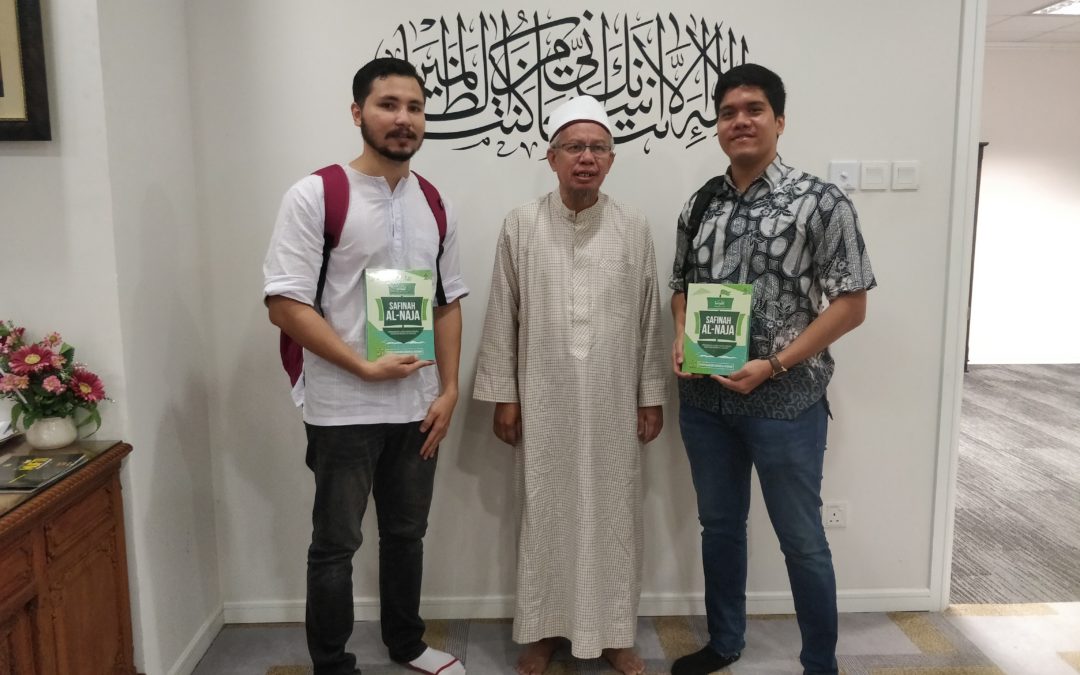
Engagement with Federal Territories Mufti, Datuk Dr. Zulkifli Mohamad Al-Bakri

Malaysian Youth Delegation members met with the Mufti of Federal Territories, Datuk Seri Dr. Zulkifli Mohamad Al-Bakri earlier this week. The purpose of the meeting was to engage with the office of the Mufti which holds authority over the religious affairs of Islamic communities in Malaysia. 


We had the opportunity to converse over topics pertaining to climate change and how awareness level among Malaysians is currently low. The discourse on climate change in Malaysia is currently trapped inside a bubble among demographics which predominantly consists of educated and urban youths. Although climate change will ubiquitously impact people everywhere in the near future, it is not talked about enough in Malaysia. 


Climate scientists predict that in Malaysia, vast areas will experience water shortage, extreme variations of rainfall, extreme heat, sea level rise, dry spells in certain areas and severe floods in others. In fact, the worst floods in Malaysia for the past 30 years have all occurred since the year 2003 and it does not look like the situation will ever let up. 


These phenomena will destroy infrastructures, affect everyday access to jobs, strangle the country’s economy, and more importantly, threaten future livelihood. All this has not even included other external threats which will definitely arrive at the country’s shores like global food shortage, the climate refugee crisis, and so on. Thus, putting the climate crisis at the top of the national agenda is an urgent task. 


However, challenges in communicating the climate crisis is immense. One of the main problems is that a lot of the materials related to the climate crisis are disseminated in English by using expressions and terminologies which are difficult for lay people. This further constricts the access to climate crisis discourse. Therefore, by engaging with figures like the Mufti, MYD hopes that people in the religious sector will increasingly pick up the discussion on the climate crisis and utilize their platforms to further the discourse in their own creative ways.

MYD members Saef and Aqil with the Federal Territories Mufti, Datuk Dr. Zulkifli Mohamad Al-Bakri

The Mufti’s office received our engagement effort very well. During the brief session that we had, the Datuk Mufti concurred with our sentiments about the lack of awareness of climate crisis in Malaysia and expressed his concerns over other environmental issues as well. The Mufti opines that above everything else, the stress on the individual responsibility of Muslims is important so that they play their roles in supporting environmental and climate crisis causes. 


Following this idea, he quotes a verse from chapter 8 of the Quran: “And fear the Fitnah (affliction and trial) which affects not only those of you who do wrong (but all people).” He explains that the Fitnah can also be understood in the form of environmental disasters like haze from wildfire or even sea level rise, thus explaining the importance for everyone, not just certain individuals, to act. 


He is optimistic that individual responsibility, when collectively awakened, can help reduce carbon emissions across various societal and economic levels. For him, when a Muslim individual possesses this sense of responsibility, they will incorporate and implement climate positive attitudes within any form of capacity or authority that they have in companies, organisations or institutions.

The Mufti also notes that he is saddened by the state of environmental consciousness in Malaysia where plastic pollution is ravaging our rivers and oceans, and unbridled greed is driving businesses to invade forests and natural habitats to extract resources. 


He adds that the consequence of this unrestrained way of life is unfortunately symbolized by the extinction of animal species such as the recent demise of Malaysia’s Sumatran rhino, Iman. The Mufti agrees that even though the environment goes through processes of natural change on its own, catastrophic environmental disasters in the recent past, including climate change, are undeniably caused by humans. This, he said, is exemplified in a verse from chapter 30 of the Quran: “Corruption (disasters) has spread on land and sea as a result of what people’s hands have done..” 

In the end he concludes that humanity’s current mode of existence is unsustainable and in his words, “tidak alami”, which means disconnected to nature. Reiterating his optimism, he says the solution is to begin with planting a sense of responsibility for nature in every Muslim individual, as each individual is able to reverberate change across all sectors.


MYD is glad to have engaged with the Mufti and received his opinions and wisdom. We hope that this engagement will translate into a more intensified commitment by the religious sector to help raise awareness in our society in the battle against the climate crisis.

Written by: Saef Wan

Edited by: Arief bin Johan Alimin

De-patronizing Youth Empowerment for Sustainable Development

De-patronizing Youth Empowerment for Sustainable Development

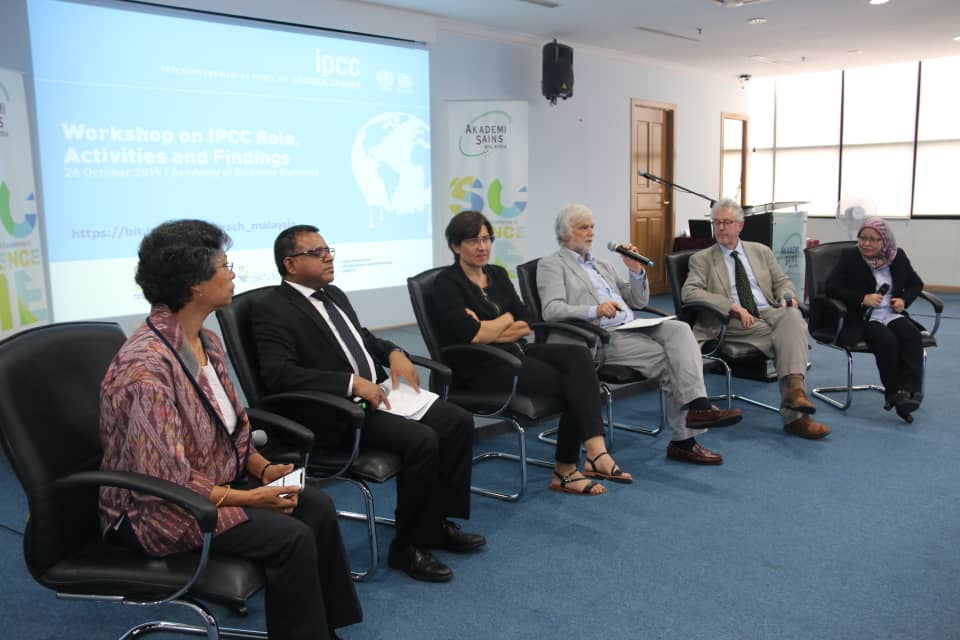
Panelists Professor Joyashree Roy (Coordinating Lead Author), Mr Amjad Abdulla (Vice-Chair, IPCC Working Group III), Professor Valerie Masson-Delmotte (Co-Chair, IPCC Working Group I), Professor Jim Skea (Co-Chair, IPCC Working Group III), Jonathan Lynn, (Head of Communications, IPCC) and CEO of Akademi Sains Malaysia Dr Hazami Habib (left to right).

Academy of Sciences Malaysia recently hosted the Intergovernmental Panel on Climate Change (IPCC) for an outreach event to communicate the IPCC’s role, activities and findings to the general public. The role of the IPCC is to provide policymakers with regular scientific assessments on climate change, its effects and risks, as well as to suggest adaptation and mitigation measures. Although the reports target policy makers, they do not prescribe any policies. It is still up to the individual governments to implement the necessary climate policies. Nonetheless, the reports significantly contribute to international negotiation processes as stipulated in the United Nations Framework Convention on Climate Change.

The IPCC  reports are incredibly useful for negotiators and the drafting of international commitments, yet they seem underutilized in Malaysia. It is apparent that the environment is still not a development priority for Malaysia. According to Mr Alizan Mahadi from the Institute of Strategic and International Studies Malaysia, the environmental sector comprises a mere 0.7% of the 2020 Budget. This signals that education, health, transportation, and housing are bigger priorities for Malaysia. While these sectors can contribute significantly to sustainable development, sustainability can only be achieved when the environment impact is considered in their implementation plans. Otherwise, these sectors will solely be useful for greenwashing and prolonging the rhetoric of sustainability. 

During the event, a handful of curious youth asked questions actively. Among these questions were: How can we transform knowledge into action? How can we engage with stakeholders and utilize the findings of the reports? How can youths and young professionals be further involved in the science-policy interface? As a youth myself, I was alarmed by these questions because it reflected on the lack of our agency and empowerment to make change, as well as the lack of space for us to experiment with the possible options to promote ways to protect our environment.

The 1970s in Malaysia was a historical period during which student activists fought to raise their concerns about pertinent issues. Their movement was highly effective such that it resulted in the enactment of the oppressive University and University Colleges Act 1971, otherwise known as AUKU. With the birth of Malaysia Baru, the Act was amended and Section 15(2)(c) was abolished, thus encouraging students to voice their opinions on current issues and partake in political activities. Consequently, the voting age in Malaysia was reduced to 18 years, thus also encouraging youth to participate in political activities.

However, despite these institutional changes, Malaysia’s social fabric continues to be restrictive and patronizing, leaving youth with little mental and physical space for growth. When Wong Yan Ke protested at his graduation ceremony, many Malaysians took on the role of the moral police and quoted the Rukun Negara, stating that he was rude and ungrateful to the university. The response to Yan Ke’s protest shows that any form of dissent in public spaces are readily investigated by the authorities and is negatively received by the public. From the latter’s perspective, upholding the respect of authorities and public order seems to be a sensible justification to stifle any form of expression inciting critical discussion.

Specific to environmental advocacy, there are three types of seasoned advocates that I have encountered. The first type are those who in a pessimistic tone, would remind me to develop resilience and endurance because the fight for sustainable development is burdensome; the second type are those who keep on repeating that “we need the youths because you are the leaders of tomorrow” but proceed with ignoring our presence when we request for support; and the third are those who claim that they are experienced, and thus only engage with us at the bare-minimum, tokenizing our participation.

Although our society is unsupportive, we should shift our perspective and see this as a liberty to strengthen youth movements. During the forum Professor Valerie Masson-Delmotte emphasized: “Your voice matters and it is powerful.” She gave an example of the effectiveness of a written manifesto by students in France who demanded climate action by the relevant decision makers. This demonstrates that we have a responsibility to foster collaboration and cooperation to create a stronger collective narrative on sustainable development.

Furthermore, we must be more critical and reflective on how we can promote climate solutions and, concurrently, pursue sustainable development effectively. We must acknowledge the fact that the discussion on sustainable development first emerged in the 1980s when the Brundtland report was published. Yet, efforts in sustainable development have been futile because its main mission in alleviating poverty and providing basic education and healthcare alienates the environment, which is crucial in achieving sustainability. At this critical juncture, we must look into the underlying political and economic systems that allow for unsustainable growth and redefine our notion of shared prosperity.

For Malaysian youths, there are present entry points for us to effect change. At the forum, Mr Ridzwan Ali from the Ministry of Energy, Science, Technology, Environment, and Climate Change (MESTECC), highlighted that the ministry has an open-door policy and cited their engagement with the Malaysian Youth Delegation as an example. We have hosted MESTECC at our training series and Post-COP Forum, as well as engaged with them to discuss climate change priority areas. While we continue to expand awareness of the climate crisis among our circles, we need to keep our leaders accountable to their commitments and ensure that our environment is a priority for the decision makers.

Given the limited space we have in the present, we need to start developing our collective priorities instead of having the elders tell us what is important and how we should do things. We must seize, if not create, our own vision and opportunities for prosperity. I call on my fellow Malaysian youth to strengthen our own sense of agency and to start experimenting with how to effect change. There is no denying that there will be failures through experimentation, but this is our only chance to explore and realize our fullest potential for a sustainable future. 

    Author Eira with CEO of Akademi Sains Malaysia Dr Hazami Habib and Professor Emerita Datuk Dr Mazlan Othman, International Science Council.

      Written by: Eira Khanum

      Edited by: Afra Alatas, Tan Cai May

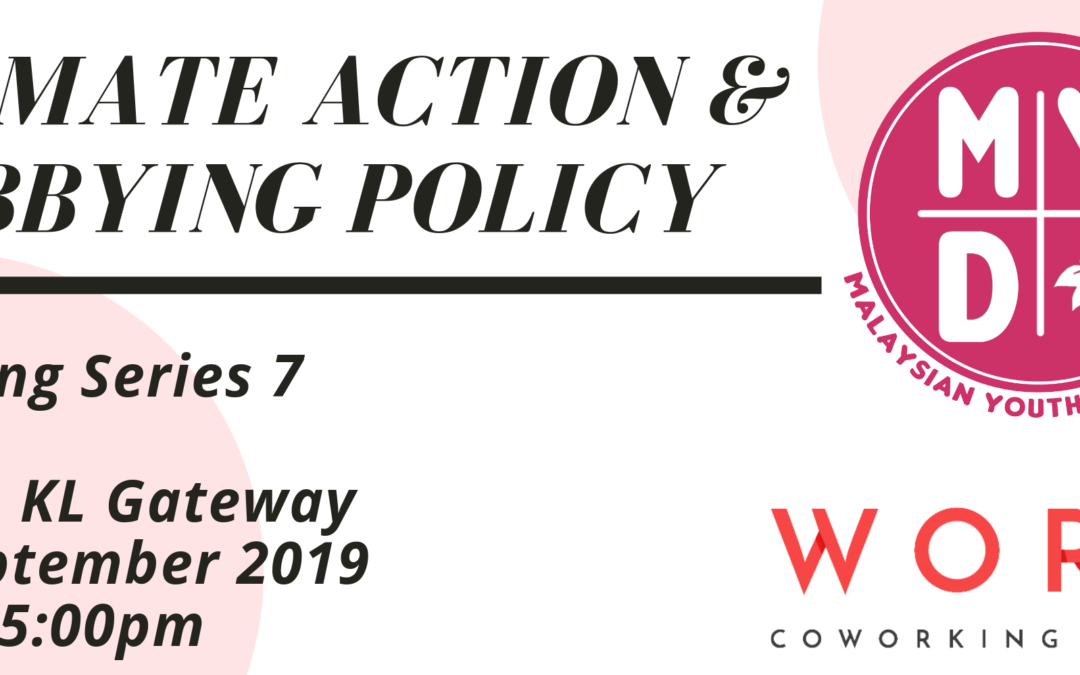
      Training Series #7: Climate Action & Lobbying Policy

      Training Series #7: Climate Action & Lobbying Policy

      Malaysian Youth Delegation proudly presents our LAST public Training Series #7: Climate Action & Lobbying Policy.

      We will discuss communication of climate change through environmental activism, give audiences insights on the history of climate action, and discus how youth agenda is pushed in a policy-based form. The public may be given insights on how they can partake in taking action into their own hands and lobby for policies that they want to see.

      Date: 29th September 2019 (Sunday)
      Time:
      2:00pm – 5:00pm
      Venue:
      WORQ KL Gateway (Bangsar South, near KL Gateway-Universiti LRT)

      Join us for an afternoon of insightful conversations with representatives from KUASA, MYD, and a Climate Advocate! Feel free to share this message to anyone who might be interested.

      Directions to Worq

      Malaysian Youth Awarded United Nations’ “Green Ticket” to Attend the Youth Climate Summit in New York

      Malaysian Youth Awarded United Nations’ “Green Ticket” to Attend the Youth Climate Summit in New York

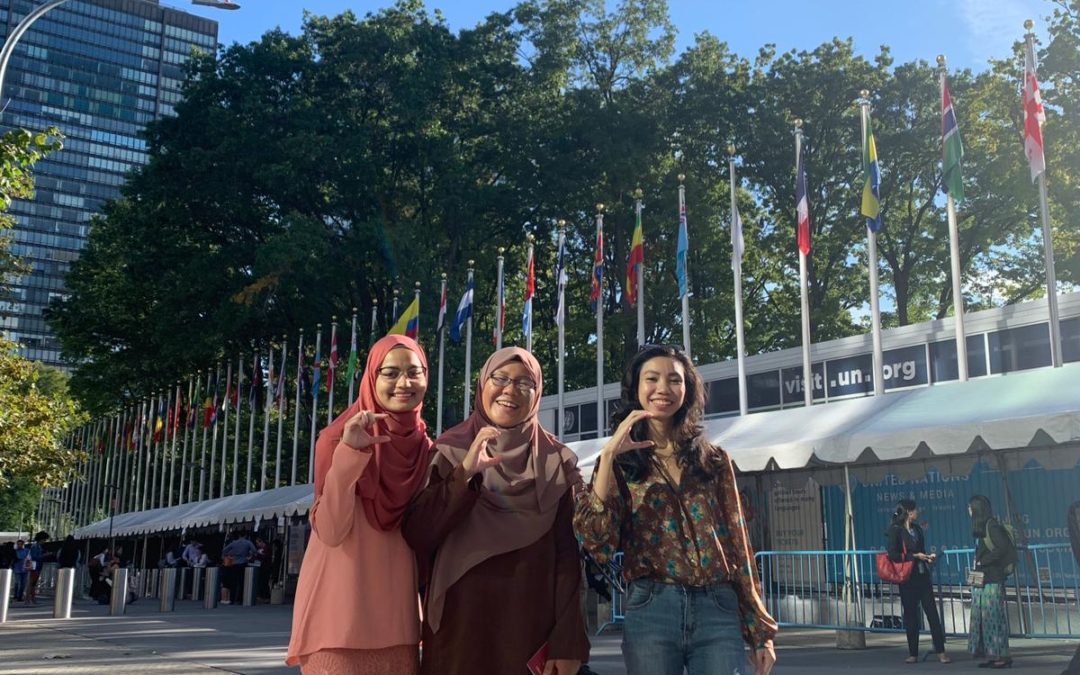
      United Nations, New York, 21 September 2019 The United Nations announced that it is providing 100 “Green Tickets” to 100 young climate activists from 100 countries to the Youth Climate Summit. These green tickets will bring a group of gender-balanced and diverse youth to the youth summit, including our very own climate advocate Liyana Yamin from Malaysian Youth Delegation. 

      The UN Youth Climate Summit is a “platform for young leaders who are driving climate action to showcase their solutions at the United Nations, and to meaningfully engage with decision-makers on the defining issue of our time”. The “Green Tickets” will fund the trip of the participants, ensuring that their journey is as carbon-neutral as possible. Participants were selected based on “their demonstrated commitment in addressing the climate crisis and advancing solution”, according to the UN website.


      Liyana is the only Malaysian to participate in the New York Youth Climate Summit under this program. She will be joining a Dominican leader and women’s health advocate, a renewable-energy entrepreneur from Rwanda, a plastics activist from Serbia, a founder of an environmental NGO from El Salvador, and many of the lead organizers of the international School Strikes for Climate launched by Thunberg. 


      She is currently pursuing her PhD in Taiwan on Ocean Resources and Environmental Changes. Regardless, at the summit, she is invited to attend the weekend coalition meeting on energy transition convening people with diverse and fresh perspectives tackling the one issue – climate change.  “I am looking forward to learning directly from youths all around the world in the frontlines of the climate emergency, and those who are coming up with new and innovative ways to combat the climate crisis”, Liyana said. 


      She expects to immerse herself fully in the experience at the summit. Particularly she aims to refresh her knowledge on the key topics leading up to COP25, and to understand other climate issues that is happening in other regions through her engagement with other climate champions. 


      She also hopes that these engagements will open up more opportunities for her to continue her advocacy in Taiwan or Malaysia, and she is looking forward to sharing her knowledge and experience on platforms such as the Malaysian Youth Delegation.


      Malaysian Youth Delegation is a youth-led non-governmental organisation who represent the local youth climate movement at international climate conferences, such as the annual Conference of the Parties, part of the United Nations Framework Convention on Climate Change. Dedicated to raising awareness of climate policies amongst Malaysians, the youth are mentored and trained to translate technical policies into more relevant and relatable information for the public. MYD holds speaking engagements with various climate organisations to better understand the current landscape of local and international climate policy. With that, MYD endeavours to hold Malaysian leaders accountable for the promises made at international climate summits. 

      Liyana (center) at the UN headquarters in New York with Malaysian student Reena, and MYD’s own, Jasmin.