by admin | Aug 7, 2015 | Blog, Knowledge, MYD2015
Equipped with the knowledge and resources, humans continue to advance themselves using the help of all kinds of technology. Similarly, in the fight against climate change, we have resorted to technology in hopes to rectify this critical situation. Nonetheless, we need to remember nothing is entirely good and viceless. In other words, there are pros and cons to everything.
In this article written by Roxanne Low, she prompts us to think about the seamless BECCS that might not be so flawless,
Considering our option using BECCS
By Roxanne Low (MYD15)
All these while, humans have been using science to their advantage to develop various technologies to improve lives. Activities that were carried out in the name of development and advancement have led humans to do onto mother earth what cannot be undone. As a result, the inhabitants of the earth, including ourselves, are left to face with the adverse impacts of global warming and climate change such as increasing Earth’s average temperature, rising sea level due to the melting of permafrost and changes in amounts and patterns of precipitation. Today, the current carbon dioxide gas concentration in the atmosphere is alarmingly at 50 parts per million (ppm) more than what is considered the safety amount (at 350ppm) “to preserve a livable planet” (350.org). Fortunately for us, in our battle against climate change, scientists and researchers have made a new technology called the Bio-energy with Carbon Capture and Storage (BECCS) available to us.
What is BECCS and how does it work?
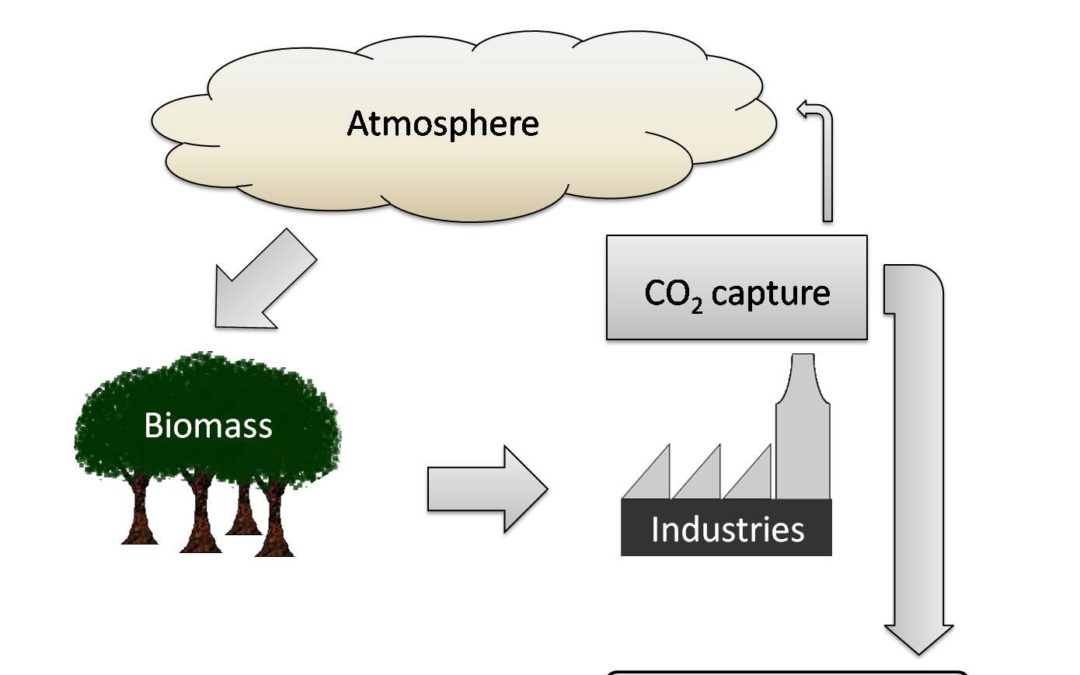
Some believe that BECCS is a brilliant technology for it would allow us to permanently remove carbon dioxide from the atmosphere. With this system, we can resolve the issue of having high CO2 ppm. According to an article published by the DailyMailUK, the logic behind BECCS is quite simple; the agricultural crops which absorb CO2 from the atmosphere will be burnt in a power station to generate energy. Then, the resulting emission from the burning of these crops will be captured by the BECCS plant and stored deep underground. Therefore, “the combination of bioenergy with carbon capture is a carbon reducing technology that can achieve net removal of carbon dioxide from the atmosphere. This is a significant advantage over other [climate change] mitigation alternatives.” (As stated in an online publishing by International Energy Agency, 2014)

Photo Credits by http://biorecro.com/?page=about_us_press
Go BECCS!
In the Intergovernmental Panel on Climate Change (IPCC) 4th Assessment Report (AR4), BECCS received much special attention because of its potential to supply energy with negative emission which in simpler terms means that greenhouse gas carbon dioxide is permanently removed from the Earth’s atmosphere. Since then, many governments have been exploring the option for BECCS as a technology that could play a role in the energy and climate policy. This can be seen through the efforts of the International Energy Agency (IEA) that organized various workshops in corporations with other institutions and experts to seek opportunities and challenges for developing BECCS in countries like Indonesia and Brazil. Furthermore, seeing that this system require a plant to store carbon emission underground, countries with gas wells and coal mines such as Britain can easily convert these into storage facilities to test out BECCS.
Today, in the faith that this newly invented super technology is the way forward as a key climate mitigation option, the governments of USA and Canada has run it on a small scale in their countries. Nevertheless, for the Carbon Capture Storage (CCS) system to be effective, it needs to happen on a large scale.
Flipping the Coin
While there seem to be great potential in the BECCS and CCS in general, there have been critics who urge that we consider both sides of the coin carefully. The the goodness of this technology can easily mask the shortcomings, but if BECCS is brought to a larger scale, the possible adverse impact would surely take a toll on our environment.
In a recent article, published by the ETC Group, it was suggested that despite what BECCS seems to be, a supreme technology, it is unlikely to save us from climate change. Few important issues that were raised by critics to dispute the concept are as follows:-
- Where would billions of tonnes of captured carbon be stored? The likely destination would be “enhanced oil recovery” techniques, increasing, not decreasing, the flow of fossil fuels that cause climate change.
- To reduce overall CO2 by 1 billion tons using BECCS would require a landmass of 218-990 million hectares of land which is 14-65 times as much land as the US uses to grow corn for ethanol. This would require landgrabbing on an enormous scale.
- BECCS proponents assume that 10 billion tonnes of wood can be harvested per year without any carbon from soil or ecosystems escaping into the atmosphere. And yet, land use change and emissions from soil are widely acknowledged as leading drivers of climate change.
- Today, the only schemes that are labelled as BECCS extract CO2 from biofuels such as ethanol, tying this scheme to their many associated problems, starting with land grabs and food price hikes.
- Would the hundreds of billions of tonnes of stored carbon leak into the atmosphere or pollute local ecosystems?
A country with geology, climate policies and skills and has also been a strong supporter of renewable energy, Germany does not fancy CCS. In fact, Jochen Flasbarth, the state secretary at Germany’s federal environmental ministry told New Scientist that buried CO2 is seen to be as bad as nuclear waste.
As a counter argument to the critical issues brought up by non-supporters of BECCS, it is that in this time of urgency, any possible solution should be given a chance to be tested. In order for us to keep the hope of keeping the increase of global temperature less than 2°C, active investigation of different technologies is greatly needed.
BECCS or No BECCS
The reason for considering various points of view is to have a more holistic judgment towards an issue. It may be justifiable that the advancement of our technology should be taken advantage of, but due underlying uncertainties that could be present in regards to “the life-cycle toxicity of some capture solvents, the operational safety and long-term integrity of CO2 storage sites, and the risks associated with CO2 transport via dedicated pipelines” (DailyMail UK, 2014), the discussion on “BECCS or no BECCS” still remains debatable.
Whether or not this ingenious technology thrives, perhaps the other approach to mitigate climate change on the grassroots level could be the awareness-raising of individual carbon footprint. The fight against climate change is not only the responsibility of large institutions and countries’ governments but every single individual’s effort to reduce carbon emission by simply a change in lifestyle. Always remember that small changes can go a long way to protect our planet Earth.
Other Resources:
- https://www.iea.org/publications/freepublications/publication/bioenergy_ccs.pdf
- http://www.tyndall.ac.uk/sites/default/files/twp147.pdf
- http://www.etcgroup.org/content/will-unicorns-save-us-climate-change-beccs-wont
by admin | Aug 5, 2015 | Blog, Knowledge, MYD2015
If you ask people, how does one increase his wealth? A logical answer you will get is to make investments and multiply your wealth. But wait, you have to be careful in what you invest in order to earn those big bucks! Not only for the sake of earning money, but also for the care of planet Earth.
Start now, join the Divestment Movement, it is still not too late! Stop letting fossil fuel companies continue to destroy your habitat. Make intelligent investment in clean and renewable energy rather than dirty fossil fuel. Since you are investing your money, you have the power and choice to make good investments.
Presenting.. an article by Pit Yuen on joining the bright side for a better and more promising future.
Join the Divestment Movement!
By Chok Pit Yuen (MYD15)
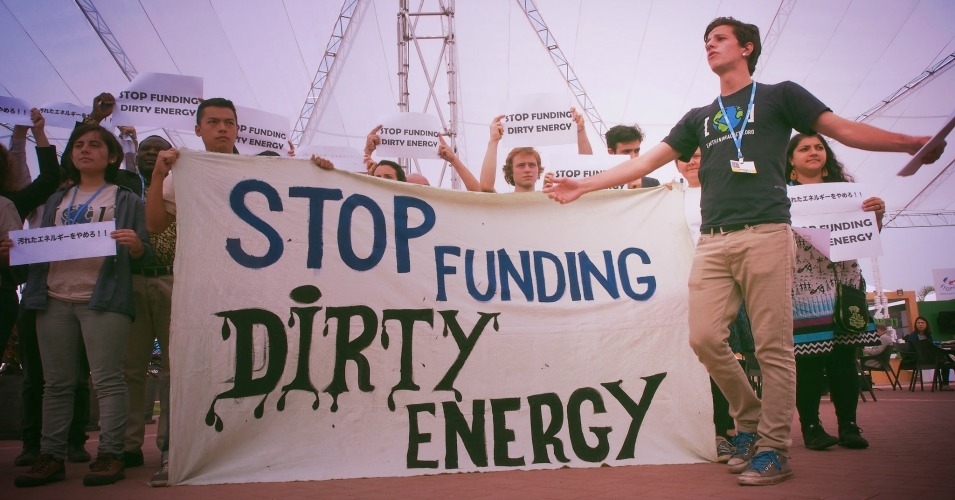
Divestment movement is a campaign rooted in US campuses to advocate various institutions and individuals from everywhere to pull out their financial investments (in term of stocks, bonds and investment funds) from fossil energy (coal, gas and oil) related firms which deemed to be the major contributor of Carbon Dioxide (one of the greenhouse gases), in order to tackle climate change issue. Now, the movement has spread across many parts of the world especially in Europe, with a record of $50bn divested so far, according to US Fossil Free campaign. More than 220 institutions (namely universities, faith organizations, local authorities, pension funds and foundations) have now committed to divest from fossil fuels since the launch of the climate campaign in 2012 by 350.org. In this instance, Fossil Free lists 837 institutions and individuals as having committed to divesting.

Photo credits by tcktcktck.org
350.org (which included power shifts movement at local levels), led by Bill McKibben, is one of the pioneer organizations that is greatly dedicated in global climate movement. They launch online campaigns, grassroots organizing and mass public actions to boycott the assets and programmes of fossil energy related companies, implant awareness of climate change to world citizens, and create the solutions that will ensure a better future for all. They also aim to reduce the amount of carbon dioxide in the atmosphere from its current level of 400 parts per million to below 350 ppm.
Quakers and Glasgow University are among the first in Europe to commit to fossil fuel divestments, in the meantime Oxford University has ruled out direct investment in coal and tar sands, hence, this movement is considered the fastest growing divestment campaign in history. The movement correspondences including the heirs of Rockefeller in withdrawing the fossil fuel investments ($60m) in the $860m Rockefeller Brothers Fund, joined with 800 global investors pledging to divest from fossil fuels in September 2014. In April 2015, the Guardian’s parent company, Guardian Media Group said it would divest its $1bn fund from all fossil fuel.

Photo Credits by www.commondreams.org
This movement might not able to concur discernible financial pressure, as in the case of Divestment movement against Apartheid of South Africa, but non-financial impact by shaping public discourse in climate change and energy security, therefore trigger the growth of renewable energy (wind, solar, biofuels, biomass, hydro and geothermal). In a long run, the movement should make sure all those committed are accountable to their commitment and follow up actions must be implemented.
On the other hand, Divestment Movement must realize that fossil fuels still play a crucial part in 21st energy mix policy especially in various industrial sectors, being the most economical and efficient energy option. This is the main argument from Third World Countries where the standard living of huge populations are below poverty line. The other applicable approach is install CO2 catchment mechanism at the output ends, in order to reduce release of CO2 into atmosphere.the developing and least developed .The more realistic and applicable approach to achieve minimal usage of fossil fuels is Energy Mix Policy, whereby fossil fuels are crucial in industry sectors especially in logistic and machinery In logical sense, fossil fuel is one of the essential parts in 21st century energy mix policy, especially in logistic of industries and commercial sectors as well as transportation.
The latest (5th June 2015) and biggest divestment movement made by Norway’s Parliament has endorsed the move of selling off coal investments ($8bn) from its $900bn sovereign wealth fund, which will affect 122 companies across the world. Not only that, it will also set an example for other investors to follow. The magnitude of social and environmental impacts of this movement will be revealed in the future, the dilemma of pros and cons is a continuous challenge to humanity.
Reference:
1. 350.org
2. The Guardian
3. Harvard Political Reviews
by admin | Jul 29, 2015 | Blog, MYD2015
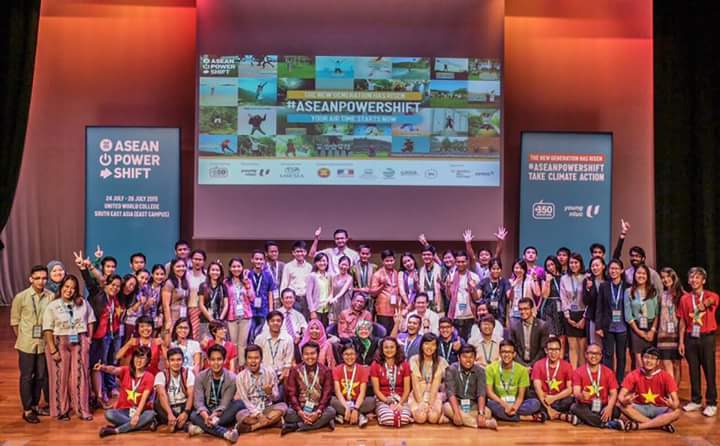
Finally, we have come to the end of the ASEAN Power Shift conference. Time flew by really quickly and before knowing it, it was time to leave Singapore to return home. Despite the short period of time, delegates and participants certainly took away a handful of knowledge and experience that would be useful in their future undertakings. Presenting you a write up of the last day by Rachel Loh
This is not Goodbye
By Rachel Loh (MYD15)
As the last day of APS dawned upon us, the sense of urgency to complete our youth position paper was at its peak. We began the day discussing every aspect of the drafted position paper within the Malaysian Youth Delegation, just like “picking fleas off dogs” as our team member, Thomas would have put it. We went through the entire paper, discussed and nitpicked on every single detail to ensure that all the clauses were acceptable.
Once everything was agreed upon within our group, we returned to the conference room to begin our working assembly with the rest of the delegations. We spent most of our time making amendments to the clauses. Since it was a collaborative position paper to represent the voices of youths all around ASEAN countries, it was of utmost importance for all delegations to come to a consensus with the clauses in the position paper. We were really hopeful to have the paper completed by the end of the session but even at our full efficiency we only managed to discuss some portions of our paper. Nevertheless, we thought that it was important to focus on quality over quantity. Seeing that there will be opportunity to finish our paper in the near future, we looked forward to contributing our time and effort and meeting our ASEAN friends again. It was truly wonderful to see how passionate and strong-willed many of the delegates were to complete this regional position paper.

Youth from ASEAN
Finally, we concluded ASEAN Power Shift 2015 with the ASEAN Cultural Appreciation Night where delegations performed and entertained everyone with their very professional dancing skills. After a night of dancing away, we left for home not just with a greater understanding of policy making but also of ourselves and each other. We would like to take this opportunity to thank the organizers, volunteers, delegates and participants for making our experience such a fruitful one and we hope to see you in the near future!
#MYD15 – Malaysian Youth Delegation – Malaysian youth climate movement at international United Nations climate conferences, UNFCCC, participants will be mentored and hold engagements with various climate expert bodies and dialogue with Malaysian policy makers and negotiators.
#ASEANPOWERSHIFT – A conference gathering youths from 10 ASEAN countries with the focus on finding pragmatic and possible solutions to tackle climate change and empower youths with creative skills and knowledge to initiate their own actions.
by admin | Jul 26, 2015 | Blog, MYD2015
Day 2 Recap!
By Merryn Chong (MYD15)
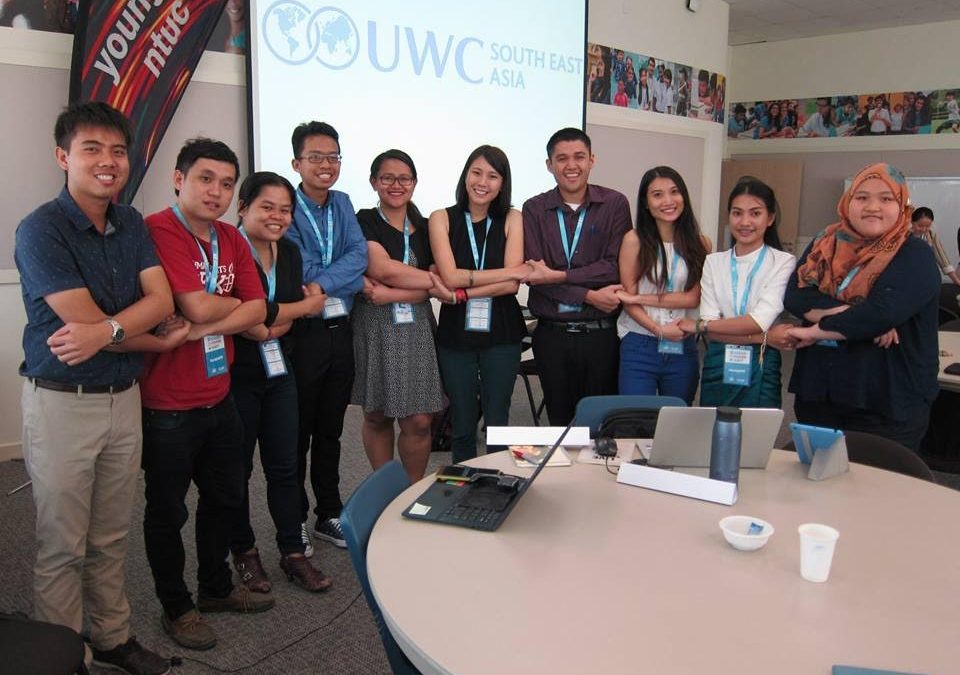
Moving into day two at the ASEAN Power Shift! The Malaysian delegates started the day early with a brief meeting on what to look forward in drafting the National Position Paper in the policy track with other delegates. While that happened, the other session was focused on knowledge track in policy, media and communications and creative activism.

Policy track is an avenue where delegates from ASEAN meet and engage in deeper discussion, to voice out their stand and to achieve a consensus on what to include in the draft before submitting our position paper. Four main topics are being looked into, adaptation, mitigation, capacity building and climate finance. During the policy track, we listened to concerns and suggestions from delegates of the 10 ASEAN countries. It was an interesting yet challenging session as everyone has different point of reference and understanding towards the topic being discussed. One of the biggest take away from the policy track is that we learned so much more about the problems that our neighboring countries are facing. After listening to other perspective, we discussed the possible efforts that could be made to solve problems.

On the other hand, knowledge tracks comprise of talks presented on various topics related to climate change. There were many enriching presentation that were carried out, covering topics such as climate change and food security in Southeast Asia, creative activism, understanding INDC and what it means to ASEAN, utilizing art into environmental activism, leveraging social media to create change, media and communication, and restoring carbon sink as a mitigation measures. Experts from respective fields had an engaging session with the audience. Questions from students, activists, volunteers and concerned citizen were raised and it provided a fresh perspective in the subject discussed.
The last session of the day was a plenary lecture of Tri-partite strategy in ASEAN towards combating climate change. The knowledge, experience and expertise of representative from government, private sector and non-governmental party were shared to the participants and delegates. We were introduced to the utilization of green building designs, sustainable urban planning, youth effort in environmental effort, the inclusion of environmental protection activities in school, and governmental support against climate change action in Singapore. There was also an emphasis on individual effort in creating cumulative impact in our countries, Earth hour was an example raised frequently in creating action.
The Malaysian delegates ended the day with a group meeting to further discuss on their views and thoughts on their respective daily learning experience, be it in policy or knowledge track. We talked about areas to further enhance and improve on policy track tomorrow, to hopefully produce a well-represented youth position paper. It was definitely a productive day of learning and working with everyone!
#MYD15 – Malaysian Youth Delegation – Malaysian youth climate movement at international United Nations climate conferences, UNFCCC, participants will be mentored and hold engagements with various climate expert bodies and dialogue with Malaysian policy makers and negotiators.
#ASEANPOWERSHIFT – A conference gathering youths from 10 ASEAN countries with the focus on finding pragmatic and possible solutions to tackle climate change and empower youths with creative skills and knowledge to initiate their own actions.
by admin | Jul 25, 2015 | Blog, MYD2015
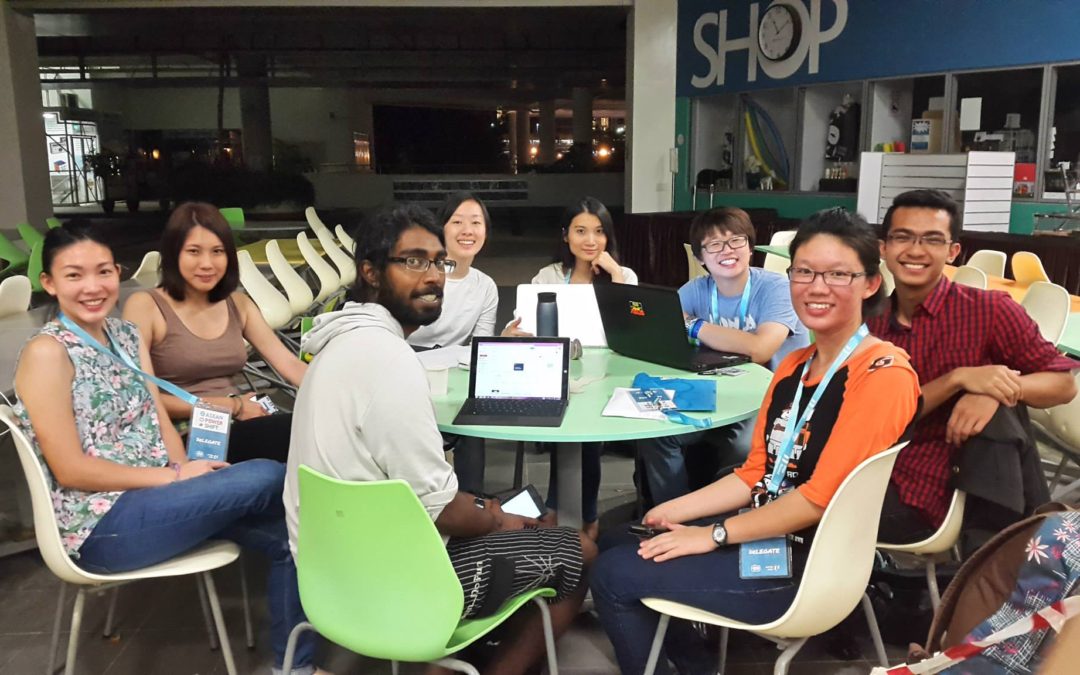
How lucky that the nine Malaysians youths are to be able to join the first ever ASEAN Power Shift happening in Singapore. While everyone is busy mingling around and gaining new knowledge from the various activities and sessions organized, the day quickly came to an end.
The first daily update is brought to you by our one and only Mohammad Shakirin Bin Shahrul Jamal or rather just Shak for short.
(more…)
by admin | Jul 23, 2015 | Blog, MYD2015
We are the MYD!
By Rachel Loh & Chua Wan Ji
MYD or The Malaysian Youth Delegation is made up of 23 youths who hail from Malaysia, just like you and me. They are just like Abu and Ah Chai or Siti and Kumar or Mei mei and Jane… you get the idea. The point that needs to be emphasized here is that, we are no children of rock stars or the VVIP, we do not possess any superhuman powers, and no, we are not rich nor influential like the Stark’s family.
The MYD was formed because each of us carried something small and invisible within us–a burning pinch of determination and passion to create a just, safe, and livable future for all. We pay attention to issues closed to heart such the climate, the environment and the carbon footprints left by the generations alive today. There is no doubt that many others agree on advocating for climate change and the environment, in fact, there are even more that are working in the same direction as where we are heading. For us, we want to be the voice that sings the song in everyone’s heart. By taking the initiative and lead, we want to encourage others to join in the fight for a sustainable future.
Ever since the official announcement of our success in the selection to join the MYD, we have held meetings and trainings, carried out surveys and even attended an interview with Traxx FM, a local radio station! We do all this because we wish to do a terrific job in presenting to you LIVE UPDATES at national conferences such as the ASEAN Power Shift 2015 that is happening tomorrow! Not only that, we want to do an awesome coverage of the pre-event, during-event and even post-event of the United Nations climate conferences, UNFCCC in Paris , France. We are acting in solidarity with frontline communities in Malaysia and across the globe to seek solutions to some of the biggest challenges humanity has ever faced.
While we strive to sharpen our skills in various fields (e.g. marketing, editing, fundraising, etc.) to bring the best stories to you, not only you can stay tune to our stories on this website, you can share them with your friends and family on your Facebook, Twitter and other social media platforms to spread the awareness. If you want to gain some experience in what we do and learn a tip or two, join us during our training series organized by Power Shift Malaysia!
It is cruel fight against rapid development and massive environmental destruction, but with your full support, we can stand tall and proud in the eyes of the world and fight braver than ever to pursue justice for all that is suffering from the effects of climate change.
p/s: Remember to stay tune to our daily updates on ASEAN Power Shift (APS) happening 24-26th of July and keep the discussion active! Send us any questions you have to our Twitter account @Powershiftmsia or comment below and we will try to get it answered as soon as possible!
Also, we would like to thank everyone who has shown us their great support in everything that we do, including the recent survey to gather opinions about Climate Change. We have produced a report summary of our findings and it will be used during the Policy Track at APS! Once again, a sincere THANK YOU to all!
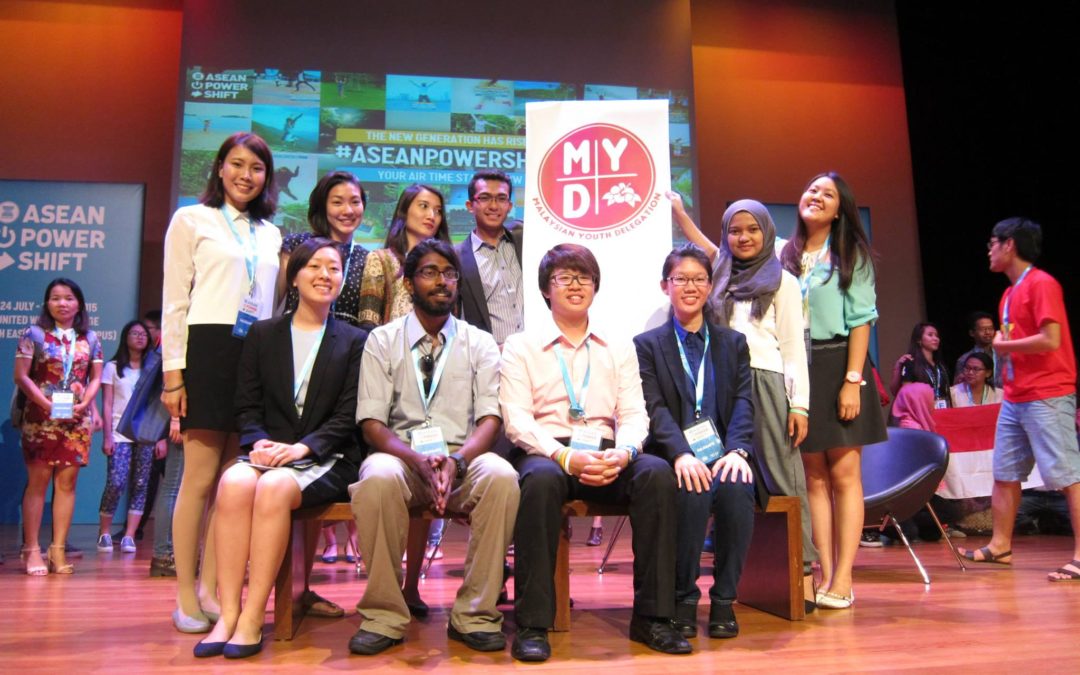
Before we forget, let’s introduce the members of MYD at APS!

Bottom row (from left): Rachel Loh, Amalen Sathananthar, Lai Yoke Hwa (Thomas), Merryn Chong Top row (from left): Chua Wan Ji, Low Pau Ling (Roxanne), Tan Mei Peng (Jolene), Mohammad Shakirin Bin Shahrul Jamal, FK Bella Septiarani, Oi Yen Tse (Emily),
You can also view our personal profiles here.
#MYD15 – Malaysian Youth Delegation – Malaysian youth climate movement at international United Nations climate conferences, UNFCCC, participants will be mentored and hold engagements with various climate expert bodies and dialogue with Malaysian policy makers and negotiators.
#ASEANPOWERSHIFT – A conference gathering youths from 10 ASEAN countries with the focus on finding pragmatic and possible solutions to tackle climate change and empower youths with skills and knowledge to initiate their own actions.
