![Make Climate Policy a Catch Phrase]()
by admin | Jan 4, 2018 | #MYD, Event, MYD2017, UNFCCC
With the intention to upskill #MYD members and the public, this training series was conducted by the Third World Network (TWN) to share their experiences and knowledge on comprehending and translating climate policy language. The session also aimed to educate on international agreement drafting.
Briefly, TWN is a non-profit organisation that tracks climate negotiations and lobbies climate change issues, with an ambition to render climate justice to the developing nations.
It was a sensational Saturday, the 19th of August 2017, at the Sala vegan restaurant in Galeria Hartamas, Kuala Lumpur. The trainers for the day were Ms. Chee Yoke Ling, an International Lawyer and director of TWN, and Mr. Indrajit Bose from Delhi, who was part of TWN as well.

Sala- Rarity to find a vegan restaurant in Malaysia (Or SE Asia in general)
The event commenced with first session of Mr. Indrajit delivering the basics in climate science and change (mainly directed towards the rest of the audience). He explained on our organisation in short and spoke on concepts such as climate adaptation and mitigation.
An interesting point for the current day, Indrajit mentioned on the global average Carbon dioxide level to be at 405 ppm, where 400 ppm is considered to be the threshold for reversible damage, beyond which is considered to be ‘Uncharted territory’. He also implied that historical figures of Greenhouse gas (GHG) emissions would have been stable if not for human interference.

Mr. Indrajit from TWN India addressing to the audience (PC- Diyana)
Moving on to Ms. Yoke Ling’s address, she had directly started with the imbalanced consumption of energy and resources in the world and stated the importance of historical emissions. The idea is that industrialised nations of today have accumulated more GHG’s in the past and hence require more efforts from their side to rectify the fastening of the warming.
Having worked in the IPCC (Intergovernmental Panel for Climate Change) and with her incredibly experienced policy negotiations, Yoke Ling felt that science find itself hard to catch up with the reality. Adding on to that, Bose also broached that the science wasn’t strong enough in developing countries and for the developed nations take advantage.

Ms. Yoke Ling explaining on Global historical emissions (PC- Diyana)
The speakers were critical of the inaction shown by the developed parties, some arguments from them were these countries wouldn’t consider the year 1850’s mark and rather focus on the 2005 emission standard. That ultimately led to less effective climate goals as GHG concentrations were, obviously, higher in the latter year. Yoke Ling informed on the clash of interests, which goes at every climate negotiations. The developed parties seemed dubious to act on mitigation whereas the developing nations were generally void of the capacity to have climate technologies for adaptation.

Engrossed spectators from MYD and community
The second half of the event focused more on UNFCCC (United Nations Framework Convention on Climate Change)and its history, pacts, protocols, agreements including the challenges faced. The Rio Environmental Summit in 1992 was one of the most important meeting and the forum to accept the ongoing problem and take respective action. In the summit, countries were obliged to push towards “self-regulation” and CBDR (Common but Differentiated Responsibilities). CBDR was the first legal instrument for tackling climate change. It’s worth noting that CBDR doesn’t apply on for climate change but to other environmental issues as well.
The emergence of COP (Conference of Parties) arose from this summit and was the supreme decision making body for climate policy. Despite the general criticism faced by the United Nations for being ineffective and unsystematic, Yoke Ling indicated this not to be the case and instead, insisted that the system was well-organised.

Thomas in deep thought as Yoke Ling explains on the Rio Summit
The speakers for the day also agree on the notion that recent climate negotiations and agreements deliberately “forgets” the historical emissions, pretty much due to the pressure given by the developing parties. “Protocols” are turning to “agreements” and these agreements are turning voluntary. They also discern that the Paris Agreement dilutes the initial mother convention document from the UNFCCC, where the convention text is unbiased.
If you had paid attention to your English classes back at school, you’d know the importance of modal verbs, or at least, they matter plentiful in climate change negotiations. It was covert but clearly observed during the Paris Agreement that the developed countries had amended all words starting with “shall” to “should”. This meant that these developed countries could exercise a certain degree of freedom in refraining to curtail emissions.

Kelly presenting the token of appreciation to our trainers. Thank you very much, Yoke Ling and Indrajit! (PC- Diyana)
Nevertheless, the issue of Climate Change has gotten global attention with many consecutive negotiations to come up, for persevering with the existing ambitions to relieve the stress on the ecosystem. We as MYD are extremely grateful for the TWN speakers who made the event possible.

Many thanks to all who made it (PC- Diyana)
By concluding and within this time, one should have unequivocally known that climate change does not only deal with climate change but other factors especially the political, economic, psychological and social aspects remain crucial – the training series was an epitome for this. Climate policy may not be the most ‘catchy’ things to be doing but it sure does make an immense impact, pretty much like catchphrases.
Written by Varunkanth Muralikanth
Malaysian Youth Delegation
![Are we still playing the climate blame game?]()
by admin | Dec 29, 2017 | #MYD, MYD2017, UNFCCC
[Updated on 30 December]
The annual UN climate change conference has officially ended and it’s been over than a month.
COP23 was deemed as a technical COP, which obviously as the name suggested, technically prepared for the next political COP in 2018.
Why 2018?
This is the year for the development of the rulebook (or Paris Agreement Work Programme) to be completed. The PAWP will provide all the clarities on how country to report NDC, how to make financial contribution, accountable, GST etc.
Even though it is not a “sexy” COP, COP23 has been (partially) politicised due to the announced withdrawal of The United States from Paris Agreement. This got us pondering before COP23 began was “How far would each party (country) go to maintain the momentum started in Paris?”
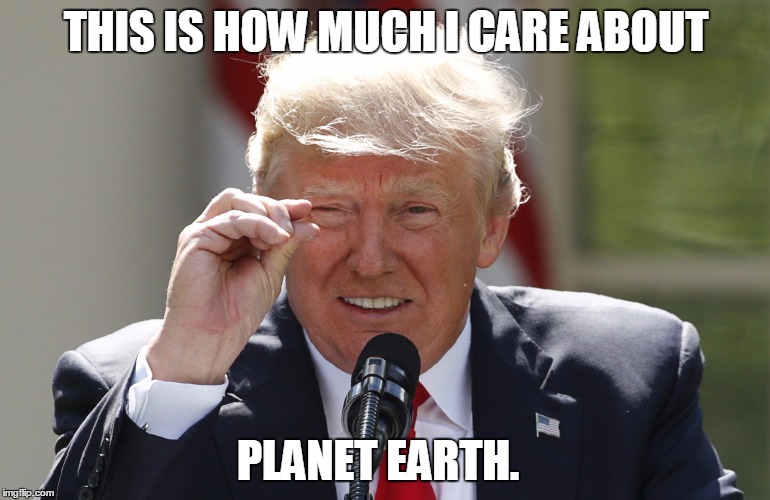
However, after going through the climate change negotiations in Bonn, something still hadn’t changed. As climate talks closed, the “who should be more responsible ” game was still being played.
In my opinion, if we want to play this game, the starting point should dated back to the 1st industrial revolution (1700s). The introduction of machinery in that period hastened the economic scenario and changed humanity’s of life. All of these were made possible thanks to James Watt. He improvised the steam engine which contributed substantially to the Industrial Revolution.
.
.
.
Coal, the culprit, is a type of fossil fuel that produce large amount of greenhouse gases when combusted in steam engines and for other energy generating purposes
Since then, the industrialising countries were able to develop the country in a care-free and guilty-free manner on the consequences of frontier economics.
Besides, they were also able to exploit natural resources from colonised countries (now called developing countries) at extremely low costs and at their expense.. Fast forward to today, most of those industralised countries (now called developed countries) are very wealthy.
When dealing with climate change, developed countries are recognised (by right la!) that they had been able to develop for a longer time without any environmental restrictions and now need to take a greater share of the responsibility. In the UNFCCC context, it is called common but differentiated responsibility (CBDR) which is an expression of the general principle of equity.

But this is what they always want!
I always believe humans are inherently selfish. So do a country which ultimately govern by homo sapiens. Developed, yet rich, countries are desperate to avoid taking the blame for the impacts of climate change on nations. Be honest la guys, who want to volunteer himself to clean up a huge mess?. The faster way to do this is “taichi” (in english – shift attention).
Here is where the game become vicious. Accusations have been thrown at China that the country has been developing since as far back as the ninth century. So China should get a fair share of responsibility similar to what other developed countries need to do. Some point fingers at some other Asian countries too.
This game is still running hot even during COP. During COP23, I’d attended an event and saw there are some people blaming developing countries (parties) groups on slowing down the negotiation process. #Fact – Parties that have similar interests are able to form group to establish common negotiating positions and also to leverage their voice.
Party groups such as G77 + China (the largest group at UNFCCC which consists of 134 developing countries) were taken to task as they did not have a statement of unity and have not established a common ground within their group on what they want.
Additionally, the Like-minded developing countries (LMDC) group was also blamed for being sceptical at the Paris Agreement, thus slowing down the negotiation process. The organiser of the event i attended also said that LMDCs tend to slow down all process by always raising conceptual (abstract) questions. He said that the Paris Agreement is a treaty that is capable of unifying ambitious countries to save the world but the LMDC group is blocking the way.

Guess the meaning…
The entire scenario of the annual negotiations, until now, can be explained with an analogy. Picture a person in a family who lavishly spends all the money he/she had and ends up with a whole load of debt. Then, the person decides not to repay the loans and instead passes down the responsibility to a newcomer in the family, who had played no part in causing the problem in the first place. Comparing, the newcomer would be personated as the developing nations whereas the debtor represents the developed countries.
Written by Thomas Lai
Edited by Varun
![Our Year End Christmas Dinner 2017]()
by admin | Dec 25, 2017 | #MYD, #PowerShiftMsia, Alumni, KemSolusi, MYD2017

An evening with a lot of commotion! (PC- Adrian)
On the 20st of December, 2017, the members and alumni from MYD, #PowerShiftMsia and Kem Solusi met the Ganga Cafe, Bangsar for dinner and get together.
After a successful year, with plenty of achievements and milestones reached, including the sending delegates for COP23, the rendezvous was a relaxed and full-filled evening. The meet was the first informal one to happen this year, i.e. with no talk hard-talk on UNFCCC or any policy related matters. ?
Starting with the cafe, the restaurant was an unique, yet an amazing choice for some sumptuous Indian cuisine. The cafe served both North and South Indian food, with the restaurant being one of my favoured places for Indian delicacies in KL. The location outside the restaurant was calmer in comparison to the hustle within the cafe.
The dinner event saw the attendees bringing their wrapped gifts, only to be shuffled and exchanged within the members. Initially each person needed to pick one random gift from a pile of gifts and then Thomas read out a mini-story that instructed us to pass on the gift in hand either to the left, right or the member on the opposite direction. Although not all seemed to grasp the story completely, it was unprecedented for many of them to be “passing games” in a long time. Nevertheless, the inquisitiveness made the shuffling much more intriguing, so kudos to Thomas!

Simple yet delicious (PC- Jolene)
A few other games were played on table- Edmund introduced the Reefcheck card game, which enthralled those who had participated and it increased their knowledge and awareness with respect to marine biology and ecosystem. Cards of humanity and Werewolf were other games played that evening with the latter being introduced to many of us for the first time.

Thanks to all those who could make it _/\_ (PC- Adrian/Jolene)

Thanks to all those who could make it _/\_ (PC- Adrian/Jolene)
The rendezvous was much needed to get to know of our fellow members even better. Having occasional meetups definitely facilitate the sharing of ideas and thoughts with each other. Once again, many thanks to all those from #PowerShiftMsia, MYD and KemSolusi who made the event possible. We wishes everyone good luck for the festive season!
Written and Edited by Varun
![Of Money Matters: Climate Finance]()
by admin | Dec 24, 2017 | #MYD, MYD2017, UNFCCC
Money is important. It has been a topic of division among climate negotiations, especially in terms of financing from developed countries to developing countries. With climate change impacting many forefront communities, it is impossible to wait for the negotiation outcomes. That is why more action on climate finance needs to take place. A climate finance panel was put together under the Global Climate Action track, sharing best practices of green finance from both the public and private sectors. However, I was only able to be present for the opening remarks because I needed to leave for the airport.

The panel was represented from both public and private sector, but highly male-dominated.
The session started with the speech from the Hon. Aiyaz Sayed-Khaiyum, Fiji Minister for Economy and Attorney General. He mentioned that in the next 20 years or so, the world economy will double and that infrastructure will more than double. However, if the infrastructures remain as they are right now, it is impossible for us to keep the temperature rise below 2 degrees. He highlighted that people see the target of the Paris Agreement, but there is much work to be done in linking the target and the urgency of the action, citing how Cyclone Winston killed 44 Fijians and wiped out a third of the Fijian GDP.

The Hon. Aiyaz Sayed-Khaiyum giving his opening remarks.
He then brought up market-centric approach for the transition into a carbon neutral economy, with finance as the vehicle, good law and governance as the support to the finance sector. The role of the state was to ensure that more work is done in the finance sector towards adaptation projects. However, he also noted the challenges of green finance – the difficult evaluation on long-term projects or even “invisible” projects that do not bring tangible outcome. As of now, there is no widely available economic indicator on the returns of green financing, thus creating a reluctance amongst the private sector to move towards green financing. This is where the government needs to come in.
Despite this issue, the overall outcome seems optimistic. He stated that the climate market is innovating, with a growth of 200 million dollars in green bond this year. There is also significant growth in terms of climate risk insurance. However, more efforts are needed in the market for de-carbonization. Concessional finance and risk finance needs to scale up and more focus needs to be added to blending public and private finance. The integration of domestic and international finance was also highlighted, alongside with more regulations on carbon pricing. He also stressed that the finance sector is an amazing mechanism for greater and faster climate, thus urging for a greater usage of the sector.
He called for a greater flow of technology and innovation towards developing countries. This is especially important for small island states like Fiji that lacks economy of scale and not be attractive to the private sector to take up new innovation. He mentioned that this is also where governments could intervene, citing the example of Fiji’s launch of the 100 billion Fijian dollars green bond.
Finance is an important apparatus in funding climate resilience projects and adjusting consumer behavior. Malaysia had also launched the world’s first green Islamic bond to fuel green growth recently in July 2017 (yay!). However, the overall awareness of the climate finance market is still not strong enough and there is much opportunity for growth and innovation.
Written and Photos by Xiandi
Edited by Varun
![Of Global Climate Action: Who Are In The Room?]()
by admin | Dec 24, 2017 | #MYD, MYD2017, UNFCCC
Since global climate action is such a big thing at COP, it is necessary to know who is the major player in the movement. Under the Global Climate Action track, a simple panel discussion was organized to give the audience a glimpse of what would be expected from the different groups.
The panel was moderated by Mr. Bertrand Piccard, with the panelists:
- Feike Seijbesma, CEO of the Royal DSM;
- Hindou Oumarou Ibrahim, Indigenous Leader and member of the Climate Action Leadership Network
- Gale Rigobert, Minister for Education, Innovation, Gender Relations and Sustainable Development, Saint Lucia
- Karien van Gennip, CEO of ING Finance
- Park Won-soon, Mayor of Seoul
I like how the panel reflects the diversity within the UNFCCC. Although not every constituency was represented on the panel, I feel like there the panel had a fair representation from both the government sector and non-government sector.
Dr. Gale Rigobert started the session with a powerful speech, highlighting the role of non-party stakeholders in building enthusiasm in climate action. “How long does enthusiasm last? Can enthusiasm infuse what is happening in the Bula Zone?” Her questions were strong and demanding, but necessary for us to rethink the paradigm of dealing with climate issues – to fix before the problem strikes as building resilience is cheaper than repairing communities. Another important part of her message was to rethink innovation and modalities to climate finance so that they are more accessible. Although she is a representative from the government, she brought up a very interesting issue of COP – state-centrism and urges more action to be taken beyond the state.

Dr. Rigobert speaking on the panel.
The next panelist was Ms. Hindou Oumarou Ibrahim, sharing her perspectives on how indigenous people contribute to climate actions. She highlighted the importance of indigenous knowledge help in adaptation and mitigation. Ms. Ibrahim put forth her hope to see how the NDC can be implemented in the daily life. One of my favorite quote from her was “if we act properly now, the future will be okay; don’t be burdened by the projection of the future.” The representation of indigenous people, along with other interest groups, in UNFCCC, is vital for a holistic consideration of the issues. These groups need to be heard as they bring valuable inputs from their respective fields.

Ms. Ibrahim sharing her insights from the indigenous people group’s perspective.
Speaking from the perspectives of business, Mr. Feike Sijbesma highlighted that people are the resources and the role of business should only be here to speed things up. His advocacy is very demand-based, focusing a lot on customer sovereignty in pivoting business decisions. He also highlighted how Royal DSM is fulfilling their corporate social responsibility through reducing carbon emission, increasing renewable energy usage and climate change advocacy, which I feel is a good mix in terms of CSR as they take into account climate actions in their operations.
Mr. Park, the mayor of Seoul gave a very informative speech, sharing how the city of Seoul practices sustainability. He encouraged citizens to be part of the solution and not just sit and wait for the government to take all actions because he believed real actions are only attained by the cities and that Seoul is a successful example because of its citizens. This shift from the state level to the local level is an important shift in paradigm after days of sitting in the negotiation rooms, listening countries speaking from an aggregate level. Ms. Karien van Gennip urges us to shift our perspective of “fighting climate change is expensive” to be profitable. She gave us a perspective on the sustainable transition in private finance, highlighting the growth of green financing vehicles, including green bond and credit that includes sustainable ratings in its consideration.
Overall, it is very insightful to have a change in inputs of how people from different sectors are working together in the fight against climate change. Knowing that there are already so much that is being done right now shines a positive light on COP despite the slow negotiation process because we know we have the whole world coming together as a community in taking climate actions.
Written and Photos by Xiandi
Edited by Varun
![The Divergence from State-Centrism]()
by admin | Dec 24, 2017 | #MYD, MYD2017, UNFCCC
Much often do we come across the frustrating situation in the climate change negotiation space where countries just couldn’t compromise on a particular decision because of their political standings. But climate change is an issue that can’t wait. That is why non-state parties had come together, putting in actions before the government in the fight against climate change.
13th November marked the high-level opening of the Global Climate Action track. The Marrakesh Partnership for Global Climate Action witnessed the unity of non-party stakeholder in accelerating climate action deliver before 2020 through the field of finance, technology, and capacity building. Bonn zone was busier during Week 2 because of all the non-party stakeholder moving around rooms, sharing best practices and coming together in bringing better and faster climate actions.
Mr. Inia Seruiratu, the Fijian minister for Agriculture and the Minister for Rural and Maritime Development and National Disaster Management graced the session with his opening remarks, highlighting the urgency of climate actions from non-party stakeholders. Governor Jerry Brown also gave his opening remarks, highlighting many good practices undertaken in California as a state. He stresses that it is important to generate enthusiasm to go against the inertia in the call for a decarbonized world. My favorite quote from his speech was “everyone is responsible, but no one is in charged,” which I find very relevant in the international climate change negotiation space. Because of the regime, it is hard (or in other words, not allowed) to pinpoint someone to take leadership for the process. That is why the significance of non-state party stands out in the quest for faster climate action. Non-party stakeholders are mobilized and borderless, ready to take on actions in solving the problem.
The main speaker for the opening was Mr. Betrand Piccard, the initiator of Solar Impulse, the world’s first airplane capable of flying perpetually without fuel. He started his speech explaining the inspiration behind Solar Impulse. Many were petrified by the idea of building a fuel-less plane because it is impossible from an energy production standpoint. But Mr. Piccard was not discouraged by that fact, “if production is not enough, then you need to change on consumption”, he believes that both production and consumption is important in the equation of finding the best solution to climate problems. I think one of the interesting points he made was through his bathtub analogy, mentioning that it is more important to plug the leak than filling in more water. Mr. Piccard’s central focus was on how we could change people’s paradigm to promote sustainability. I do agree with him when he said that being sustainable is not ecological, but logical. As an innovator himself, he stressed the need for better legal frameworks to draw existing innovation into the market.

Mr. Piccard sharing the story behind Solar Impulse.
The opening of the Global Climate Action track brought a sense of urgency and inspiration to climate action. It highlighted that the long-term goals of negotiation are not a celebration because the people who proposed it will no longer be around to be accountable for their decisions. But most importantly, it reminds us of how there are so much knowledge and technology around us that could be implemented to fight climate change right now. There is no need to wait for innovation because we can do it now.
Written and Photos by Xiandi
Edited by Varun


