Our vision is empowered youth taking action on climate change for a sustainable future for all.
Our mission is to amplify the voice of youth movements in climate change through education and mobilisation.
The Solution > Make The Conversation Mainstream – Shaping public opinion with comprehensive climate change education at all levels, especially young people.
Program Delivery
Climate Education
Kem Solusi – Introduction to the basic science of Climate Change and the available solutions. Planning to host 6 camps yearly are various location. Targeting 6 kem x 50 pax = 300 engaged participants
Kampus Sarap – Experiential field trips and community action that demonstrate sustainability in action, waterfall and beach cleanups, visit to landfill and solar farm. Targeting 6 trips yearly x 35 pax = 210 engaged participants
#TabungPustakaIklim – Putting climate change related books onto shelves of libraries. 6 box of books x RM2,000, targeting 6 library to be engaged
Pen-debunga-an – Planting bunga raya, providing food for our pollinators, in supporting growth of a healthy forest. Promoting national flower and bee population, will be our souvenirs throughout the year.
Public Policy
Malaysian Youth Delegation – Advocacy on public policy studies on multilateral and national platforms, Policy Reading & Understanding Training. COP22 in Marakesh, Morroco, target to send 4 pax yearly to attend UNFCCC meetings and Engagement in National Policy Making
National Climate Change Survey – Nationwide survey roadshow with youth on Climate Change Awareness and Concerns. Targeting 10 briefings and survey sessions yearly x 50 pax = 500 pax
Iklim Anggota Parlimen Saya – Holding our Elected Representatives Accountable, Policy Education and Monitoring. Targeting to publish online & a book of our MPs reply on environmental & CC issues
Campaigning Skills
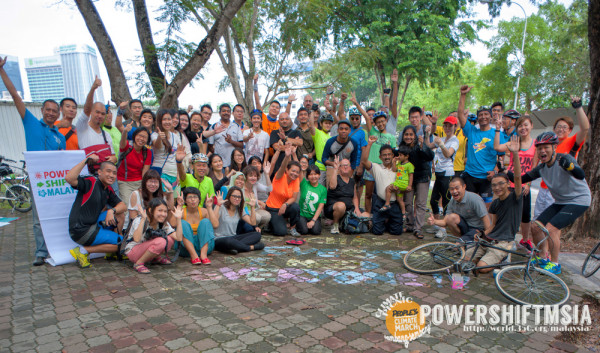
#PowerShiftMsia – Empowering & mentoring on effective campaigning and project management skills. Targeting 2 camps yearly x 50 pax = 100 participants and 10 adopted projects
We are prepared to broadcast the forum LIVE on our YouTube Channel. This depends heavily on the availability of the strong and stable internet provided by the venue.
The Paris Agreement, a legally binding document in concerns to tackling climate change and the issues that follow it. This agreement came together in the last UNFCCC Conference of Parties (COP21) which is a conference to discuss and find a solution to combat climate change. However, what does this agreement mean and how does it affect Malaysia? Do we have a role in this agreement? Come and find out more at this Post COP21 Climate Change Forum.
9.30am – Registration Opens
10.00am- MYD Intro
10.05am – Opening Speech by Mr Gurmit Singh from MCCG
10.15am – Post COP21 Sharing by Kyle Gracey from SustainUS
10.30am – Post COP21 Climate Change Forum
11.30am – QnA
11.45am – Token of Appreciation and group photo
12.00pm – End
Panelist include :
Chee Yoke Ling (TWN)
Ms. Chee Yoke Ling
Yoke Ling is an international lawyer whose areas of expertise include the environmental,social and economic impacts of globalization, especially in countries of the South. Since 1993 she has worked closely with key negotiators from the global South, scientists and NGOs to campaign for bio safety and climate justice. She was a member of a Malaysian task force that worked on two national laws related to bio safety and the regulation of access to genetic resources. Her current focus areas are: climate change, the interface between biodiversity/traditional knowledge and intellectual property rights, the relationship between multilateral environmental agreements and trade agreements, environmentally-sound technology transfer, and developments on these issues at the UN Framework Convention on Climate Change, Convention on Biological Diversity, World Trade Organisation, and the World Intellectual Property Organisation. TWN is a non-profit international network of organisations and individuals involved in sustainable development issues, the South and North-South relations. Yoke Ling Chee is trained in international law, with degrees from the University of Malaya (Malaysia) and Cambridge University (UK). (taken from etcgroup.org-http://www.etcgroup.org/users/yoke-ling-chee)
Dr Gary Theseira
Dr Gary Theseira
Dr. Gary William Theseira is the Deputy Undersecretary of Environment Management and Climate Change Division Ministry of Natural Resources and Environment. He is responsible for policy analysis, development and support for environment management and climate change and sustainable development.
Elaine See
Elaine See
Elaine is one of the Malaysian Youth Delegation (MYD) members who was being chosen to attend the COP21 in Paris. Currently a pre-university student, Elaine has shown extraordinary passion to make contribution in the national climate movement since 18. At 19, she actively participated in intensive climate trainings and forums as well as took up challenges such as chairing the Promulgation of the Malaysian Youth Statement on Climate Change and speaking on behalf of the ENGO at the UNFCCC. These efforts successfully equipped her to be an uprising climate youth leader. During her time in COP21, Elaine had been tracking the Malaysian Delegation and following the negotiations, mainly focusing on climate finance
Kyle Gracey
Kyle Gracey
loves empowering young leaders and advancing sustainability. His work broadly focuses on international and domestic sustainable development, including energy policy, environmental policy, and technology policy He is currently a Graduate Research Assistant in Engineering and Public Policy Department with Cernegie Mellon University. He is the Chair, Board Director of SustainUS (U.S. Youth for Justice and Sustainability). Kyle co-founded the youth coalition at the United Nations climate change negotiations, and wrote speeches for Vice President Joe Biden.
Please fill in for registration –
#MYD – Malaysian Youth Delegation – Malaysian youth climate movement at international United Nations climate conferences, UNFCCC, participants will be mentored and hold engagements with various climate expert bodies and dialogue with Malaysian policy makers and negotiators. http://powershiftmalaysia.org.my/category/myd2015/
The year 2016 has kicked off with great news for Power Shift Malaysia as our Malaysian Youth Delegates return from a 3 week mind opening experience at COP21 in Paris. Having witnessed the gathering of leaders from all over the world sign a legally binding document on climate change, the youth of Power Shift were later pleasantly surprised to be given the opportunity to meet with our very own youth minister and Member of Parliament, YB Khairy Jamaluddin.
YB KJ accepting the MYD Youth Statement on Climate Change (L-R) Sze Ming, Sheena, YB KJ, Aisyah, Adrian Yeo
During the meeting, KJ expressed his appreciation for the work carried out by Power Shift Malaysia in educating Malaysian youth on the effects of climate change and the urgency to take action for climate justice. He expressed his thoughts on the awareness level of the Malaysian youth, saying “we are still far behind on our knowledge about climate change and how it is affecting us”.
Khairy says, he would personally like to have the opportunity to travel to work by train someday soon.
Khairy went on to add that Malaysians, including himself, still find it hard to change our behavioral patterns when it comes to placing the needs of the environment before our own. However, he understands the challenges that we are faced with especially in the transportation areas such as the current lack of public transportation which he hopes will improve by a ten fold once the new MRT lines are running. Khairy says, he would personally like to have the opportunity to travel to work by train someday soon.
Sharing Climate Change Plans to YB Khairy Jamaluddin
The meeting reached its peak when the members of Power Shift Malaysia handed the Youth Statement on Climate Change to Khairy Jamaluddin. The document had previously been sent to the Prime Ministers prior to COP21. Khairy said that while the statement was ambitious, it carried weight and was a necessity due to the ticking clock of climate change. He understands that this is the voice of the concerned youth of Malaysia and will continue to support our cause.
#PowerShiftMsia, with the support of the Malaysian Ministry of Youth and Sports, hopes to bring the Malaysian youth together in developing more publicly available resources about climate change and its affects on Malaysians. A lot more research is required to develop the right policies to effectively tackle the climate crisis whilst creating awareness and educating the general youth about these policies. Our government’s initiatives will only go as far as being paperwork without the action of the people. The youth should be at the forefront of these actions, demanding a cleaner, better future for all Malaysians.
Written by: Sheena
To read the Malaysian Youth Statement on Climate Change (2015), click here.
ROUNTABLE DISCUSSION – LOOKING TO THE FUTURE: BEYOND COP21
A total of 195 countries came together in Paris to discuss how to address climate change in December 2015. But this Paris Agreement but itself doesn’t save our Planet.
This Roundtable seeks:
To discuss the background of the COP processes; and
What next including how gender can be an enabler to the post COP process?
Details
Date: 3rd February 2016 (Wednesday)
Time: 9.30am – 1.30pm
Place: Pusat Kepimpinan Wanita Tun Fatimah Hashim, Level 2, Bangunan Tun Fatimah, Universiti Kebangsaan Malaysia. (Tel: 03-89214795)
AGENDA:
9.30 – 10.00am : Registrations and Arrivals
10.00 – 12.30noon: Roundtable Discussion Overview on
Moderated by Ms Sunitha Bisan, Chair NCWO Environment and Climate Change Committee.
Representative Ministry of Natural Resources and Environment
Ms Chee Yoke Ling, Third World Network
Mr Adrian Yeo, Founder PowerShiftMsia, Mentor – COP21 of Youth Representatives at COP21
12.30 noon: Closing Remarks & Lunch
REGISTRATION:
email: ncwohq@gmail.com
tel: 016-9800355 (Ms Sunitha) or 03 – 79543008 (NCWO Hq)
During COP21, I attended this side event, discussing enablers and obstacles in implementing INDCs, which reveal the complexity of de-carbonisation, integration of multiple objectives & implementation challenges.
Side event detail
Some countries may be heading toward economic deficits due to impacts of climate change. So, will INDCs advance or retard a country’s development? Let us delve deeper into this issue and further understand this concept.BrazilEmilio La Rovere (COPPE) is from Brazil. He mentioned that Brazil is facing deep political and economic crisis now. Brazil is sharply reducing deforestation since 2014. Carbon emissions are still increasing, due to energy-related and agricultural industries. In order to decrease GHG emissions effectively, Brazil will invests in cleaner technology. He also mentioned that the current renewable energy profile is already in line with the government’s 10-year energy plan. Emilio also mentioned that Brazil will be further researching on second generation biofuels to increase its energy efficiency and reducing its GHG emissions. He believes this will create new job opportunities.I believe you are as curious as I was regarding the term “second generation biofuel”. First generation biofuels are derived from crops such as sugarcane and vegetable oil. Whereas second generation biofuels, are fuels that manufactured from lignocellulosic biomass (plant biomass) and is seem as an alternative to petroleum for the production of biofuels. The feedstock can get from agricultural residue, forest residue or municipal solid waste. Albeit second generation biofuel yield a higher energy efficiency compared to first generation, the production is still challenging due to the complexity of the biomass and issues related to production and logistic. South AfricaHilton Trollip (MAPS; Energy Research Centre, University of Cape Town, South Africa) started his speech by providing the current situation faced by South Africa. South Africa is facing a food security problem and it will be a tough time for them to get in line with their INDC. Due to economic recession, South Africa cannot afford renewable energy as the country needs to domestically purchase vast amount of fossil fuel for electricity generation. Since the country is highly dependent on fossil fuel, this gives the coal based industries higher influencing power to reject the adoption of renewable energy. In order to tackle this, Hilton stated that the country is undergoing independent researches on decarbonisation at the same time without jeopardizing the economy. He also believes that going green will create more job opportunities.IndiaNavroz Dubash (Centre for Policy Research, India) mentioned that India wants to develop climate policies that are driven by long term goals. In India, climate change is not a political issue but energy security. 300 millions of people in India do not have access to electricity and 10 to 12 million job need to be introduced to reduce poverty. On top of these, air pollution is also a persistent concern that will increase health risk of respiratory diseases. In order to reach a win-win situation, he states that India needs to take action to stop building highly reliant carbon future to prevent undesirable circumstances. PeruDavid Garcia(Project PlanCC, Peru) stated that Peru is focusing on an adaptation plan instead of a mitigation plan. From his point of view, it is a trade off between mitigation and adaptation when it comes to funding.The country is developing strong technical and practical data that can be used to convince policy makers. Working well with the government is the key for a better climate future. Moreover, he brought up that Peru wants to stop deforestation and has better waste management practices.Written by: Thomas Yoke Hwa LaiEdited by: Loh Rachel



 India
India
 Host: Arlene