![Of Money Matters: Climate Finance]()
by admin | Dec 24, 2017 | #MYD, MYD2017, UNFCCC
Money is important. It has been a topic of division among climate negotiations, especially in terms of financing from developed countries to developing countries. With climate change impacting many forefront communities, it is impossible to wait for the negotiation outcomes. That is why more action on climate finance needs to take place. A climate finance panel was put together under the Global Climate Action track, sharing best practices of green finance from both the public and private sectors. However, I was only able to be present for the opening remarks because I needed to leave for the airport.

The panel was represented from both public and private sector, but highly male-dominated.
The session started with the speech from the Hon. Aiyaz Sayed-Khaiyum, Fiji Minister for Economy and Attorney General. He mentioned that in the next 20 years or so, the world economy will double and that infrastructure will more than double. However, if the infrastructures remain as they are right now, it is impossible for us to keep the temperature rise below 2 degrees. He highlighted that people see the target of the Paris Agreement, but there is much work to be done in linking the target and the urgency of the action, citing how Cyclone Winston killed 44 Fijians and wiped out a third of the Fijian GDP.

The Hon. Aiyaz Sayed-Khaiyum giving his opening remarks.
He then brought up market-centric approach for the transition into a carbon neutral economy, with finance as the vehicle, good law and governance as the support to the finance sector. The role of the state was to ensure that more work is done in the finance sector towards adaptation projects. However, he also noted the challenges of green finance – the difficult evaluation on long-term projects or even “invisible” projects that do not bring tangible outcome. As of now, there is no widely available economic indicator on the returns of green financing, thus creating a reluctance amongst the private sector to move towards green financing. This is where the government needs to come in.
Despite this issue, the overall outcome seems optimistic. He stated that the climate market is innovating, with a growth of 200 million dollars in green bond this year. There is also significant growth in terms of climate risk insurance. However, more efforts are needed in the market for de-carbonization. Concessional finance and risk finance needs to scale up and more focus needs to be added to blending public and private finance. The integration of domestic and international finance was also highlighted, alongside with more regulations on carbon pricing. He also stressed that the finance sector is an amazing mechanism for greater and faster climate, thus urging for a greater usage of the sector.
He called for a greater flow of technology and innovation towards developing countries. This is especially important for small island states like Fiji that lacks economy of scale and not be attractive to the private sector to take up new innovation. He mentioned that this is also where governments could intervene, citing the example of Fiji’s launch of the 100 billion Fijian dollars green bond.
Finance is an important apparatus in funding climate resilience projects and adjusting consumer behavior. Malaysia had also launched the world’s first green Islamic bond to fuel green growth recently in July 2017 (yay!). However, the overall awareness of the climate finance market is still not strong enough and there is much opportunity for growth and innovation.
Written and Photos by Xiandi
Edited by Varun
![Of Global Climate Action: Who Are In The Room?]()
by admin | Dec 24, 2017 | #MYD, MYD2017, UNFCCC
Since global climate action is such a big thing at COP, it is necessary to know who is the major player in the movement. Under the Global Climate Action track, a simple panel discussion was organized to give the audience a glimpse of what would be expected from the different groups.
The panel was moderated by Mr. Bertrand Piccard, with the panelists:
- Feike Seijbesma, CEO of the Royal DSM;
- Hindou Oumarou Ibrahim, Indigenous Leader and member of the Climate Action Leadership Network
- Gale Rigobert, Minister for Education, Innovation, Gender Relations and Sustainable Development, Saint Lucia
- Karien van Gennip, CEO of ING Finance
- Park Won-soon, Mayor of Seoul
I like how the panel reflects the diversity within the UNFCCC. Although not every constituency was represented on the panel, I feel like there the panel had a fair representation from both the government sector and non-government sector.
Dr. Gale Rigobert started the session with a powerful speech, highlighting the role of non-party stakeholders in building enthusiasm in climate action. “How long does enthusiasm last? Can enthusiasm infuse what is happening in the Bula Zone?” Her questions were strong and demanding, but necessary for us to rethink the paradigm of dealing with climate issues – to fix before the problem strikes as building resilience is cheaper than repairing communities. Another important part of her message was to rethink innovation and modalities to climate finance so that they are more accessible. Although she is a representative from the government, she brought up a very interesting issue of COP – state-centrism and urges more action to be taken beyond the state.

Dr. Rigobert speaking on the panel.
The next panelist was Ms. Hindou Oumarou Ibrahim, sharing her perspectives on how indigenous people contribute to climate actions. She highlighted the importance of indigenous knowledge help in adaptation and mitigation. Ms. Ibrahim put forth her hope to see how the NDC can be implemented in the daily life. One of my favorite quote from her was “if we act properly now, the future will be okay; don’t be burdened by the projection of the future.” The representation of indigenous people, along with other interest groups, in UNFCCC, is vital for a holistic consideration of the issues. These groups need to be heard as they bring valuable inputs from their respective fields.

Ms. Ibrahim sharing her insights from the indigenous people group’s perspective.
Speaking from the perspectives of business, Mr. Feike Sijbesma highlighted that people are the resources and the role of business should only be here to speed things up. His advocacy is very demand-based, focusing a lot on customer sovereignty in pivoting business decisions. He also highlighted how Royal DSM is fulfilling their corporate social responsibility through reducing carbon emission, increasing renewable energy usage and climate change advocacy, which I feel is a good mix in terms of CSR as they take into account climate actions in their operations.
Mr. Park, the mayor of Seoul gave a very informative speech, sharing how the city of Seoul practices sustainability. He encouraged citizens to be part of the solution and not just sit and wait for the government to take all actions because he believed real actions are only attained by the cities and that Seoul is a successful example because of its citizens. This shift from the state level to the local level is an important shift in paradigm after days of sitting in the negotiation rooms, listening countries speaking from an aggregate level. Ms. Karien van Gennip urges us to shift our perspective of “fighting climate change is expensive” to be profitable. She gave us a perspective on the sustainable transition in private finance, highlighting the growth of green financing vehicles, including green bond and credit that includes sustainable ratings in its consideration.
Overall, it is very insightful to have a change in inputs of how people from different sectors are working together in the fight against climate change. Knowing that there are already so much that is being done right now shines a positive light on COP despite the slow negotiation process because we know we have the whole world coming together as a community in taking climate actions.
Written and Photos by Xiandi
Edited by Varun
![The Divergence from State-Centrism]()
by admin | Dec 24, 2017 | #MYD, MYD2017, UNFCCC
Much often do we come across the frustrating situation in the climate change negotiation space where countries just couldn’t compromise on a particular decision because of their political standings. But climate change is an issue that can’t wait. That is why non-state parties had come together, putting in actions before the government in the fight against climate change.
13th November marked the high-level opening of the Global Climate Action track. The Marrakesh Partnership for Global Climate Action witnessed the unity of non-party stakeholder in accelerating climate action deliver before 2020 through the field of finance, technology, and capacity building. Bonn zone was busier during Week 2 because of all the non-party stakeholder moving around rooms, sharing best practices and coming together in bringing better and faster climate actions.
Mr. Inia Seruiratu, the Fijian minister for Agriculture and the Minister for Rural and Maritime Development and National Disaster Management graced the session with his opening remarks, highlighting the urgency of climate actions from non-party stakeholders. Governor Jerry Brown also gave his opening remarks, highlighting many good practices undertaken in California as a state. He stresses that it is important to generate enthusiasm to go against the inertia in the call for a decarbonized world. My favorite quote from his speech was “everyone is responsible, but no one is in charged,” which I find very relevant in the international climate change negotiation space. Because of the regime, it is hard (or in other words, not allowed) to pinpoint someone to take leadership for the process. That is why the significance of non-state party stands out in the quest for faster climate action. Non-party stakeholders are mobilized and borderless, ready to take on actions in solving the problem.
The main speaker for the opening was Mr. Betrand Piccard, the initiator of Solar Impulse, the world’s first airplane capable of flying perpetually without fuel. He started his speech explaining the inspiration behind Solar Impulse. Many were petrified by the idea of building a fuel-less plane because it is impossible from an energy production standpoint. But Mr. Piccard was not discouraged by that fact, “if production is not enough, then you need to change on consumption”, he believes that both production and consumption is important in the equation of finding the best solution to climate problems. I think one of the interesting points he made was through his bathtub analogy, mentioning that it is more important to plug the leak than filling in more water. Mr. Piccard’s central focus was on how we could change people’s paradigm to promote sustainability. I do agree with him when he said that being sustainable is not ecological, but logical. As an innovator himself, he stressed the need for better legal frameworks to draw existing innovation into the market.

Mr. Piccard sharing the story behind Solar Impulse.
The opening of the Global Climate Action track brought a sense of urgency and inspiration to climate action. It highlighted that the long-term goals of negotiation are not a celebration because the people who proposed it will no longer be around to be accountable for their decisions. But most importantly, it reminds us of how there are so much knowledge and technology around us that could be implemented to fight climate change right now. There is no need to wait for innovation because we can do it now.
Written and Photos by Xiandi
Edited by Varun
![What can the committee in Article 15 do?]()
by admin | Dec 24, 2017 | #MYD, MYD2017, UNFCCC
Implementation has always been a sticky situation for any agreement. That is why an agenda is set out under the Ad-Hoc Working Group on Paris Agreement (APA) to iron out the modalities and procedures for the effective operation of the committee to facilitate implementation and promote compliance referred to in Article 15, paragraph 2 of the Paris Agreement.
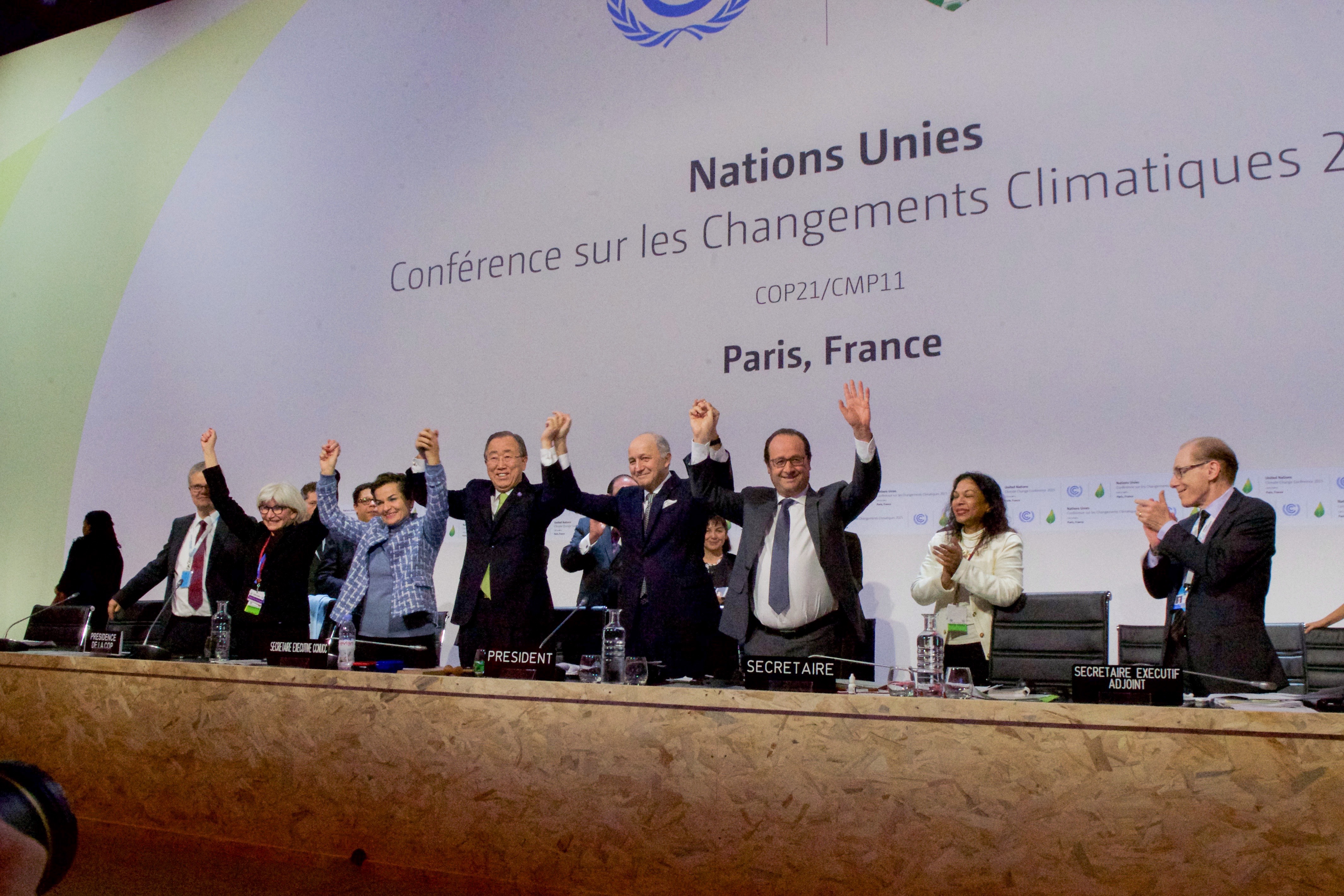
After the Paris Agreement came into place, now it’s time to iron out the modalities.
The discussion on agenda 7 was very structured as the co-chairs already laid out guiding questions for the delegates to follow. They also ensure that the delegates are only responding based on the question laid out in guiding questions. That is why the discussion for agenda 7 surrounds three themes: the systemic role of the committee, the possible linkage between the committee and transparency, and the possible linkage between the committee and support arrangements. But I will only be mentioning about the discussion surrounding the systemic role of the committee.
Being a topic that could be interpreted from different dimensions, it is fresh to see how different parties come up with different perspectives on the role of the committee. Several countries have proposed that the committee should bear a substantive role in the implementation process. They suggested that the committee could take initiative to keep parties accountable for being consistent with the guideline set out for implementation. Parties also brought up the fact that when the committee faces systemic issues, it could either identify the issue itself or start work based on the information given by the secretariat, so long as it is under the mandate authorized by the CMA.
There are also parties who questioned if the committee itself is the best body to solve its own systemic problems. But on the other hand, there are also parties who stressed that the committee needs to have the ability to handle issues as they arise, recognizing problems that affect implementation so that they could engage with various support institutions. In this case, the committee was proposed to be viewed as an enhancement tool to ensure the best usage of the support mechanism, follow up with parties and support parties when necessary.
Some parties, however, insisted that the committee should only be facilitative in nature. They stressed that the committee must only deal with parties on a case-by-case basis, especially downplaying the significance of systemic issues and stressing that the committee should focus on individual cases. Parties also suggested that the facilitative role of the committee should be supported by inputs from supportive mechanism bodies. Supportive mechanism bodies could be invited to partake in dialogue because their inputs could provide substantial assistance.
In overall, the developed countries do not wish to have too much ironed out for the committee, claiming that the committee could decide on those details on its own while developing countries wanted more details to be entailed in the decision. The political significance of being vague over the details of an overseeing committee might eventually bring structural issues, making the committee occupied with deciding what it should do instead of focusing on doing what it should do. However, it is difficult to reach consensus as both blocs are hard on what they believe in.
Written by Xiandi
Edited by Varun
![Five or ten? The quest for the most suitable time frame]()
by admin | Dec 24, 2017 | #MYD, MYD2017, UNFCCC
As I rushed into the SBI informal consultation on the common time frame for Nationally Determined Contribution (NDC), it is not hard to notice that the room is much emptier than the rooms that I have had been.

The crowd waiting outside of GENF for other SBI informal consultations.
The session started with the chair asking the delegates if there is any objection to allowing observers into the room. I am glad that none of them raised an objection, or else I would be really disappointed. It is also good to note that the chairs are doing their best to ensure the session is open. However, I still think that access to observers should not be a privilege handed over by the delegates depending on their opinion, but should be a norm that the UNFCCC practices.
The chair then pulled up the draft conclusion from the day before so that the delegates can continue to discuss on this. A concern was raised by the delegate of Saudi Arabia on the lack of inclusivity of the draft conclusion. He questioned the existence of the draft conclusion because there are still speakers who have not voiced their opinion from the previous speakers’ list. Since Saudi Arabia already flagged his concern, the chair decided to move into speakers’ list first then just to the discussion on the draft conclusion.
There was a general consensus on several items. The floor was generally accepting towards the application of the common time frame on parties’ NDC starting from 2030. However, the main disagreement parties had was on the period of the common time frame.
Norway explained how the 10-years’ time frame of NDC was set in its country and recognizes that other countries might have benefits of having a 5-years’ time frame. It called for flexibility in allowing all countries to submit their time frame. A side note is that Egypt stated that developing countries would need more time for assessment to decide their suitable time frame as they need to include the consideration of adaptation and mitigation in their NDCs, although Egypt did not specify their preferred proposal on the common time frame. Majority of the parties does not agree with Norway’s proposal. Most of the developing countries were pushing for a 5-years’ time frame, citing that the Paris Agreement already fixed the communication of the NDC to be every five years.
Brazil (representing Brazil, Argentina, and Uruguay) highlighted that the focus of the topic should not be the 5-years or 10-years problem, but how to align everyone’s effort to ensure everyone is moving forward at the same time so that everyone is subjected to the same level of scrutiny. Singapore also raised similar proposal: to identify any mismatch between cycles and time frames. So far parties had a general agreement on the 5-years review process, even those who are pushing for a 10-years NDC time frame.
The floor then proceeded to discuss on the draft conclusion. The importance of the gap between communication and implementation of NDC was highlighted during the discussion. The general atmosphere of the session was rather collaborative as parties were rather diplomatic in raising their request. In the end, there were no major divergent on views on the issue and most parties were agreeable on the draft conclusion.
Written and Photos by Xiandi
Edited by Varun
![From the COP Opening Plenary]()
by admin | Dec 24, 2017 | #MYD, MYD2017, UNFCCC
With all the sessions going on at the same time, it is not surprising that I found myself attending two opening plenary back-to-back. Shortly after the APA opening plenary, I stayed on in New York room to attend the Conference of Parties (COP) Opening Plenary.

Yes, it’s the same place I’ve been heading to, there aren’t that many rooms around big enough for opening plenaries.
Several developing countries reiterated their strong stance in being in line with the principle of Common but Differentiated Responsibility and leaving no one behind. Most of the developing country blocs have stated that they align with the G77 and China Bloc. Palestine, in particular, has brought up the issue of clashing meetings. It was complaining about how the coordination meetings clashes with the plenary, and coordination meetings were also clashing other coordination meetings. Palestine also mentioned that it managed to deliver its first Nationally Determined Contributions and National Action Plan even though they are facing a hard time with the Israeli occupation. It declared that it will stand in solidarity with the rest of the world.
The chair then gave a brief summary of the consultations that were being held before the plenary, and that is was generally on the acceleration of pre-2020 commitments and increasing post-2020 ambitions. As the plenary session proceeds, the floor moves into agenda 2 on the organization of work. The chair brought up the issue of the hosting of COP25, but no response was received from the floor so the chair decides to leave the agenda for the informal consultations.
Agenda 10
After that, the chair continued onto agenda 10 of matters relating to finance. Morocco highlighted that finance is the roadmap of COP22 and that it will continue on its work on the major progress achieved in the high-level ministerial meeting in 2016, the adaptation fund. It also mentioned its achievement in putting many mechanisms in place to increase green finance initiatives. Morocco also stressed the importance of continuing the triangular and south-south cooperation in order to boost the capacity of all countries. It also called for greater identification of new capacity within the funding sector. I think it is good to see how Morocco is holding itself accountable for last year’s outcome and continues to build on it locally. Morocco’s involvement was highly praised by the co-chair of the standing committee on finance (SCF). The SCF mentioned that the committee looks forward to improving the efficiency of itself.
On the Green Climate Fund (GCF), the co-chair mentioned that it is seeking to enhance GCF support for technology through tech incubator and accelerator. The board is looking to strengthen its operational framework in order to address gaps in its policies as well as agreeing on new guidelines to generate high-quality investment proposal in developing countries. This objective aims to help build national and institutional capacity for the realization of low carbon development. Throughout this COP, the board also aims to streamline its funding proposal consideration and improve its risk management framework. From what I have heard from some of the fund applications, the current proposal consideration process is very lengthy and somewhat cumbersome to the extent that it is counterintuitive. This should be a clear indication of the need for the streamlining of the process. I am glad the co-chairs are aware of the problem and are putting in efforts to solve it.
Written and Photos by Xiandi
Edited by Varun


