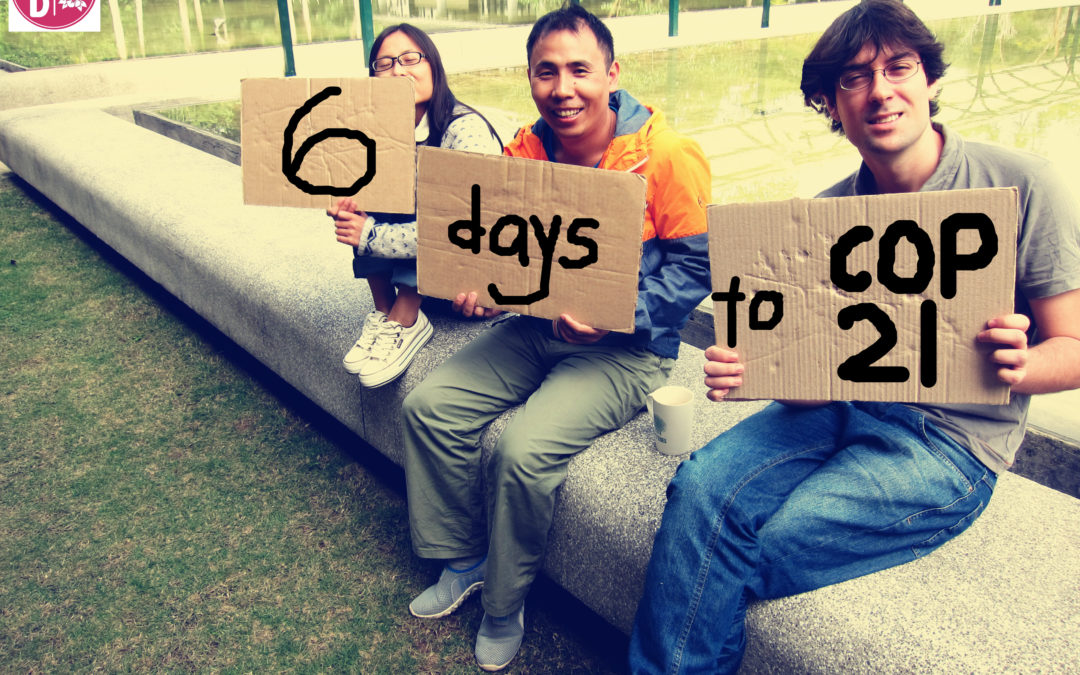
With 6 days to go before the COP21 takes place in Paris,
let’s do some serious talk on climate adaptation and mitigation
with Roxanne Low from Malaysian Youth Delegation.
The terms “adaptation” and “mitigation” are two important terms that are fundamental in the climate change debate. The IPCC defined adaptation as adjustment in natural or human systems in response to actual or expected climatic stimuli or their effects, which moderate harm or exploits beneficial opportunities. Similarly, Mitchell and Tanner (2006) defined adaptation as an understanding of how individuals, groups and natural systems can prepare for and respond to changes in climate or their environment. According to them, it is crucial to reducing vulnerability to climate change. While mitigation tackles the causes of climate change, adaptation tackles the effects of the phenomenon. The potential to adjust in order to minimize negative impact and maximize any benefits from changes in climate is known as adaptive capacity. A successful adaptation can reduce vulnerability by building on and strengthening existing coping strategies.
In general the more mitigation there is, the less will be the impacts to which we will have to adjust, and the less the risks for which we will have to try and prepare. Conversely, the greater the degree of preparatory adaptation, the less may be the impacts associated with any given degree of climate change. For people today, already feeling the impacts of past inaction in reducing greenhouse gas emissions, adaptation is not altogether passive, rather it is an active adjustment in response to new stimuli. However, our present age has proactive options (mitigation), and must also plan to live with the consequences (adaptation) of global warming.
The idea that less mitigation means greater climatic change and consequently requiring more adaptation is the basis for the urgency surrounding reductions in greenhouse gases. Climate mitigation and adaptation should not be seen as alternatives to each other, as they are not discrete activities but rather a combined set of actions in an overall strategy to reduce greenhouse gas emissions. Climate mitigation is any action taken to permanently eliminate or reduce the long-term risk and hazards of climate change to human life, property. The International Panel on Climate Change (IPCC) defines mitigation as: “An anthropogenic intervention to reduce the sources or enhance the sinks of greenhouse gases.” Climate Mitigation and Adaptation
Climate adaptation refers to the ability of a system to adjust to climate change (including climate variability and extremes) to moderate potential damage, to take advantage of opportunities, or to cope with the consequences. The IPCC defines adaptation as the, “adjustment in natural or human systems to a new or changing environment. Adaptation to climate change refers to adjustment in natural or human systems in response to actual or expected climatic stimuli or their effects, which moderates harm or exploits beneficial opportunities. Various types of adaptation can be distinguished, including anticipatory and reactive adaptation, private and public adaptation, and autonomous and planned adaptation.”
This is quite a serious post,
truly reflecting how seriously climate change can affect us.
Do look foward to COP21, people,
as it’s our responsibility in addressing this serious issues.
With eight more days before COP21,
I had a chance to get some precious insights from Mr.Richard Corlett
about the coming COP21 and Malaysia…..
Mr. Richard is the Lead Author for the Asia chapter of the Working Group 2
contribution to the Fifth Assessment Report of the Intergovernmental Panel on Climate Change (IPCC).
Enjoy the read, people.
Richard T Corlett, November 22th 2015
Every climate conference is billed as the “Last chance to save the world!”, but they never are. A single meeting is not enough to save the world, and a single failure – like COP-15 in Copenhagen – is not necessarily a disaster. However, success at COP-21 in Paris really is crucial, not just because every delay makes future solutions more difficult, but because for the first time – and possibly the last – all the major players are in agreement on what needs doing. Things could still go very, very wrong in Paris, but they could also, potentially, go very, very right. Most countries have submitted ‘INDCs’ setting out what they intend to do and, while some of these are too vague or too conditional to be useful, the major players – China, the USA and the EU – have all promised substantial cuts in greenhouse gas emissions, as have many of the other significant emitters.
COP-21 is supposed to agree on cuts that will keep global warming below the dangerous threshold of 2oC. If you add up all the INDCs we won’t achieve this, even if every country keeps to its promises, with 2.7-3.0oC more likely. Moreover, the 2oC target is already too high to save coral reefs and prevent a substantial rise in sea-level, as well as a lot of other less predictable, but no less unwanted, consequences. However, even 3oC is a great deal better than the 4-6oC warming that will occur if we do nothing. Moreover, the major players have agreed on the need to review the targets every 5 years. I think this is as good as we could realistically expect from Paris.
The INDCs – Intended Nationally Determined Contributions – are voluntary and, despite calls to make the Paris agreement legally enforceable, there is no practical way to do this. Will the USA invade Canada if it continues to exploit its huge tar sand deposits? No, it won’t. So, even if world leaders reach an agreement in Paris, the ‘enforcement’ will have to come from each country’s own citizens. Only Americans can hold the next US president to an agreement that Obama signs and only Indians can make sure that India meets its targets. As global economic power shifts to Asia it will be Asians – particularly Asian youth – who must ensure that Asia does not repeat the environmental mistakes of the industrial revolution in Europe, or indeed, the more recent industrialization of China. Apart from China, the key Asian players are India, which cannot follow China’s coal-fueled road to development, and Indonesia, with massive carbon stores in forests and peat, and even more in coal, which must not end up in the atmosphere.
Malaysia is one of the very few middle-income countries that has not submitted an INDC, and joins a sad list that includes some tiny oil states (e.g. Brunei), as well as countries too poor (Nepal, Nicaragua), isolated (North Korea), or unstable (Libya, Yemen, South Sudan) to make a meaningful commitment. The absence of a clear, international commitment to reduce emissions makes it harder for Malaysians to hold their government to account, but Malaysia’s currently substantial emissions from industry and deforestation, and its ambitions for first-world status, make it essential that they do so. It is not too late for Malaysia to submit an INDC to the UN and, assuming the 5-year review period is agreed in Paris, the government needs to plan for 2020. Obvious emission-reduction targets are zero deforestation, particularly in Malaysian Borneo, and protection of the vast areas of logged and degraded forests so that they absorb carbon as they recover. For urban areas and industry, energy efficiency is a priority, plus a rapid increase in the proportion of electricity from renewable sources. These actions all have co-benefits for biodiversity and for people, so it is not just about carbon. Raising awareness is also important, but it needs to be linked to hard scientific information. Malaysians need to understand the risks they face, from warming and the less predictable changes in rainfall patterns, and how global cuts in emissions will reduce these risks. It is time for Malaysia to join the rest of the world in stopping climate change.
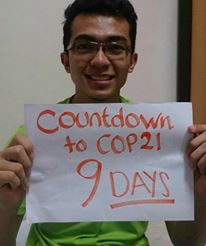
What’s the number after 10? Absolutely right, 9 more days to COP21. Save your date from 31 Nov to 11 Dec because COP21 is happening.
In 1993, Malaysia signed the United Nations Framework Convention on Climate Change (UNFCCC) and ratified it on 17 July 1994. Today, the international treaty is signed by 193 countries. The main objective is to “stabilise greenhouse gas concentrations in the atmosphere at a level that will prevent dangerous human interference with the climate system.”
Every year, Malaysia will sent a team of negotiator to attend Conference of Parties (COP). This year is non exceptional as people around the world is giving high hope that the world leaders would come out with solutions to safeguard our mother earth.
Being a negotiator is an uneasy job as your country rely on you to come out with the best deal. Every single words, comma, sentence and content must take into serious consideration. Sometimes, negotiation process can extend till late night or the next day until a decision can be finalised.
Among the Malaysian negotiators are as below:
a) Prof. Gurdial Singh
A senior practicing lawyer and Legal Advisor to the Third World Network. He qualified at King’s College, London and the University of Malaya.Gurdial has represented Malaysia and the legal profession at numerous international forums and meetings, and has published several books covering civil trial advocacy, indigenous peoples’ knowledge systems, and drafting for lawyers.
b) Dr.Gary William Theseira
Deputy Undersecretary of Environment Management and Climate Change Division Ministry of Natural Resources and Environment. He is responsible for policy analysis, development and support for environment management and climate change and sustainable development.
Environmental Management and Climate Change (PASPI)
Senior Research Officer with FRIM (2001 to 2010)
Post Doctoral Associate, University of Minnesota
Ministry of NRE Undersecretary
Ph.D. Mississippi State University, USA
Prof Gurdial – Malaysia at ADP – COP20
Prof Gurdial – Malaysia at COP Closing Plenary COP20
Keep counting down and we will reach our target soon. Be with us to the opening of COP 21.
It was Deepavali. What’s more meaningful than spending the day strolling around Brickfields KL to experience the atmosphere of a Deepavali celebration. Let’s pretend to be tourists for a day to find out more about the Indian culture in Malaysian. I wonder how it is celebrated in KL?
Like a tourist, I asked for directions. It took me quite some time to figure out the location of the bazaar. This bazaar was organised by Kuala Lumpur City Hall (DBKL). You can see the PM’s image in the backdrop of the stage. The caterer was serving lunch for FREE. I am not sure if it is just during celebrations or because elections is around the corner.
I was disappointed with the use of polystyrene to serve lunch. I thought DBKL would be “GREEN”, banning polystyrene. The reality was not the same as I thought. Much more awareness is needed. Actions show more than words.
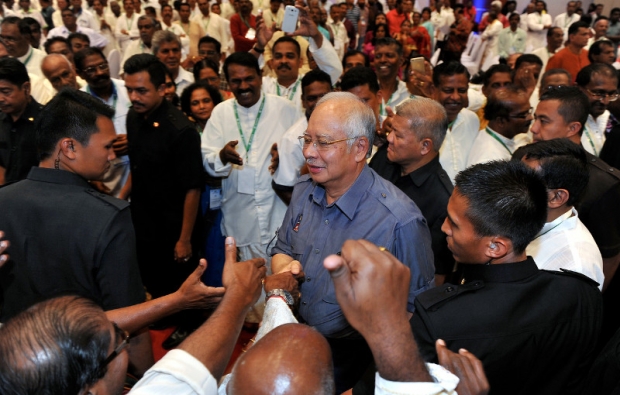
When I was about to enjoy my lunch, the emcee announced that our PM Najib is going to arrive at any moment. People were standing up to welcome our PM. Suddenly, an important message came across my mind.
Am I supposed to hand over the Malaysian Youth Statement on Climate Change to the PM as I will be meeting him in person? Our group is facing difficulties in approaching the PM office to hand over the statement. This will be a great opportunity!
Quickly, I WhatsApp-ed the MYD group at 12.58pm to asked for anyone who can come over to BAC, KL. The responses I get within a minute were: OMG pass the statement, please pass him the statement.
It was all spontaneous, and I felt so unprepared. How could I find a printing shop with internet connection during a public holiday. Time was ticking. I just saw PM walked pass in front of me, greeting people as he walked by. Without delay, I finished my lunch, (no food is allowed to be wasted in any circumstances). I ran and walked in between to search for a photocopying shop. I asked the receptionist in Signature Hotel. He replied: “Not sure if it is open today, the shop is located after Chapatthi restaurant.”
I then spotted Pod’s Café http://podsbackpacker.com/ on my way, the place where we had our first MYD meeting. Might as well as just gave it a try. I asked the person who sat in front of the computer: do you provide any printing service here? To my surprise, he said yes, RM1 per piece. It took me a while to search, download and print the Statement. Meanwhile, I got to know Mr. Singh. I explained briefly to him what I was doing and why it was so important to hand over the Statement. He was so supportive and did not charge me for the printing.
It was drizzling when I left Pod’s Café. Running while holding the printed statement like a scroll, I was hoping that the PM hasn’t left the celebration. I was so relieved when I saw the PM still sitting at the VIP area. He had a large force of security surrounding him. It was impossible to make my way through the security and VIP seats. So I found a strategic location, sat down and wait.
After a while, the MC announced “Thank you YAB Najib for his arrival…”, and in that moment I turned around, the PM was heading in my direction. I quickly stood up, shaked his hand, wished him HAPPY DEEPAVALI and said: “This is the Malaysian Youth”. I only managed to say 6 words before I passed the Malaysian Youth Statement on Climate Change to him. It was an unbelievable achievement. Our statement was in the PM’s hand. Hopefully, he will read it at the end of the day. By that time, my body was finding time to adjust back to normal because it all happened in a blink of an eye.
WhatApps-ed the good news to MYD team at 1.37pm. After that, I went back to pod’s café to thank Mr. Singh for his kind assistance. It turned out that Hari Deepavali 2015 is more than just a celebration to me. This will mark the importance of the PM listening to the voices of the youth in addressing the issues of climate change. The future is already at risk even if we act now and fight for a better future. For your information, this year’s 21st Conference of Parties (COP 21) is a conference where world leaders will come together for an agreement to reduce global temperature rise by 2 degree celcious. http://unfccc.int/meetings/paris_nov_2015/meeting/8926.php
On the next day, I received a message from my teammate as below:
Has anyone ever tried to convince you to order something off a menu that you couldn’t afford? Or had a friend buy an expensive appetizer and assume you’ll help split the bill? The dynamic isn’t too far from what’s happening in climate policy right now, with hypocritical, richer countries trying to convince poorer countries that green energy is the way forward. At the end of November, diplomats will gather in Paris for the most high-stakes dinner party yet: Their orders are likely to affect our collective climate future. Check out our video above for all the savory details.
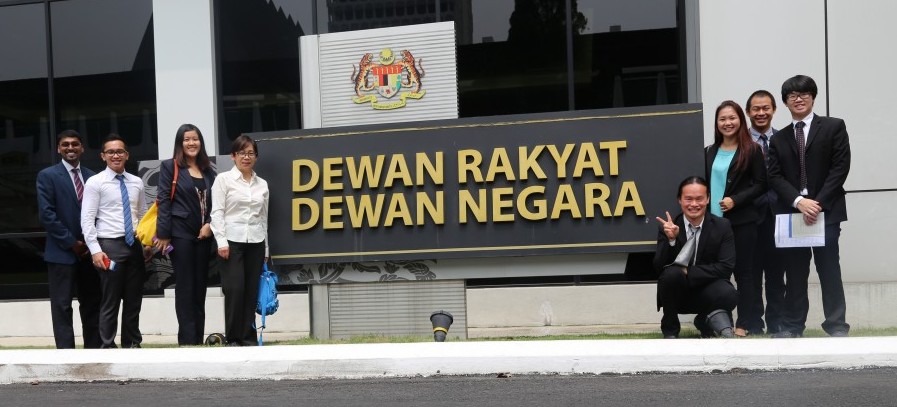
Semua pelawat ke Parlimen diberi taklimat mengenai peraturan asas sebelum memasuki Dewan Rakyat. Para pelawat perlu menunduk kepada Yang di-Pertua Dewan Rakyat semasa memasuki dan meninggalkan Dewan; sebagai pemerhati pelawat tidak dibenarkan menyoal ataupun mengambil bahagian dalam perbincangan dan perbahasan.
Sesi Soal Jawab Parlimen hari ini bermula pada 10 pagi sehingga 11.30pagi. Pembentangan tentang agenda yang telah dijadualkan mengambil tempat dahulu dalam bentuk soal jawab. Hanya ahli parlimen atau Member of Parliament (MP) yang terlibat dalam agenda-agenda tersebut diminta menghadiri mesyuarat. Dalam proses soal jawab, kita memerhatikan suasana parlimen agak hangat disebabkan ejekan antara MP.
Selepas itu, perbahasan tentang usul bajet 2016 dimulakan. Didapati banyak rombongan lain yang melawat parlimen pada masa yang sama. Oleh itu, setiap rombongan hanya dibenarkan untuk mengunjungi parlimen dalam giliran sepanjang 30 minit. Malangnya, rombongan kita tidak sempat memasuki parlimen sekali lagi semasa perbahasan tentang bajet kerana tempat duduk pemerhati telah dipenuhi. Selain itu, pihak media mempunyai ruang khas di luar parlimen untuk mereka menyaksi dan melapor persiaran langsung mesyuarat parlimen. Kita berpeluang menyaksikan satu persidangan media yang dianjurkan oleh pihak pembangkang.
Sesi makan dan perbualan dengan YB Ong Kian Ming
Kita bertemu dengan YB Ong Kian Ming untuk sesi perbualan. YB Ong adalah MP kawasan Serdang dan juga jurucakap alam sekitar bagi parti DAP. Beliau memberi informasi ringkas kepada kita tentang kementerian-kementerian di Malaysia yang terlibat dalam perubahan iklim and alam sekitar, iaitu Kementerian Sumber Ali dan Alam Sekitar (NRE), Kementerian Tenaga, Teknologi Hijau Dan Air (KeTTHA), Kementerian Pengangkutan, Kementerian Perdagangan Antarabangsa dan Industri (MITI), dan Kementerian Kesejahteraan, Bandar, dan kerajaan tempatan.
Sepatutnya NRE merupakan kementerian yang bertanggungjawab untuk memimpin dan meyelaraskan sebarang perbincangan tentang alam sekitar dan perubahan iklim antara semua kementerian, tetapi keadaan sebenar bukannya sedemikian. YB Ong menerangkan bahawa alam sekitar dan perubahan iklim masih bukan keutamaan dalam agenda nasional. Interaksi antara kementerian yang tidak cekap juga menyebabkan perancangan dan pelaksanaan kurang memuaskan.
Selain itu, YB Ong menyatakan pandangan beliau tentang penyerahan INDC dari kerajaan Malaysia. Oleh kerana Malaysia merupakan negara yang hampir mencapai status negara maju, kita perlu memberi komitmen yang lebih tinggi daripada negara membangun yang lain. Saya setuju pada pandangan tersebut bahawa Malaysia sepatutnya melakukan lebih banyak secara sukarela tetapi bukan bergantung semata-matanya kepada permindahan teknologi dan kewangan dari negara maju.
YB Ong menawarkan nasihat kepada MYD bahawa kita perlukan bacaan dan penyelidikan yang lebih menyeluruh terutamanya maklumat tentang konteks Malaysia. Dengan ini, kita akan jadi lebih yakin tentang soalan atau isu yang sesuai dan penting untuk dinyatakan kepada pasukan rundingan Malaysia di COP21.







 I was disappointed with the use of polystyrene to serve lunch. I thought
 WhatApps-ed the good news to MYD team at 1.37pm. After that, I went back to pod’s café to thank Mr. Singh for his kind assistance. It turned out that Hari Deepavali 2015 is more than just a celebration to me. This will mark the importance of the PM listening to the voices of the youth in addressing the issues of climate change. The future is already at risk even if we act now and fight for a better future. For your information, this year’s 21st Conference of Parties (COP 21) is a conference where world leaders will come together for an agreement to reduce global temperature rise by 2 degree celcious.