When Adaptation Goes Wrong: Exploring the Dangers of Maladaptation in Climate Change Response

When Adaptation Goes Wrong: Exploring the Dangers of Maladaptation in Climate Change Response

When Adaptation Goes Wrong: Exploring the Dangers of Maladaptation in Climate Change Response

Written by: Ain Zahra binti Hisham, Elaine Tan Su Yin, Nurafiqah Mohd Sahar, Yong Sin Ng, Zhi Lin Yeoh

Edited by: Tan Zhai Yun (Nat), Felix Culas

Adaptation is key to addressing the climate change crisis. We must adapt to reduce our vulnerability to the harmful effects of climate change.

However, is all adaptation good? Studies have shown that some adaptation measures can trigger existing climate risks or create new, unintended risks for the community that can lead to increased vulnerability in the long run. Such poor adaptation practices are known as ‘maladaptation’.

The 6th Assessment Report by the Intergovernmental Panel on Climate Change (IPCC) defines the term maladaptation as “actions that may lead to increased risk of adverse climate-related outcomes, including via increased greenhouse gas emissions, increased vulnerability to climate change, or diminished welfare, now or in the future.” The same IPCC report claims that maladaptation is typically an unintended consequence.

When it comes to adaptation measures, there are differences between successful adaptation, unsuccessful adaptation, and maladaptation.

An unsuccessful adaptation simply means an action did not work. When adaptation results in increased vulnerability for other groups and sectors, even in the future, that is maladaptation [1].

Defining successful adaptations is challenging. [2] Adaptation metrics such as measurement of vulnerability, tracking the execution of adaptive actions, and conducting monitoring and evaluation (M&E) could help measure the ‘success’ of an adaptation project. These metrics, however, remain debatable as there are various viewpoints and evolving conditions when measuring adaptation [3].

A study suggests that maladaptation and successful adaptation should be viewed as two ends of a spectrum as both can have different degrees of success or failure [4] . This spectrum (Figure 1) spans from a  worst-case situation where the target population is irreversibly more vulnerable to climate change, to the ideal scenario of transitioning towards a climate-resilient pathway [4].

Figure 1: A spectrum of responses from maladaptation to adaptation (Schipper, E.L.F., 2020).

*This figure reflects a snapshot rather than movement in time.

Below are some examples of good and poor adaptation strategies, and further explains how we can avoid maladaptation.

Flood Adaptation

Successful adaptation case studies

The Netherlands

The Netherlands, being a highly populated and highly flood prone country, protects their coastline with a dike system. Additionally, they have adopted a “Room for the River” strategy based on the principles of water safety and spatial quality as it gives water more space to spread out when floods occur (Figure 2). However, the dike system requires immense capital investment for construction and maintenance [5].

Figure 2: Different types of flood adaptation strategies in the “Room for the River” programme (Busscher et al., 2019) [6]

United Kingdom

In the United Kingdom, the Thames Barrier (Figure 3) curbs storm surges and high tides from flooding to protect 1.3 million people and £275 billion worth of property, infrastructures and historical places. Studies indicate that based on sea-level rise projections and the ability to raise embankments, the Thames Barrier can protect London until 2070 [7].

Figure 3: Photos of Thames Barrier. The Thames Barrier is one of the largest flood defence barriers in the world. It spans 520 metres across the River Thames and protects London against storm surges and rainfall swelling.

Maladaptation case studies

India

Bihar is India’s poorest and most flood-prone state, with 73% of its land area affected by floods due to its topography andsevere monsoonal rains. To the farmers, the rivers in Bihar fertilise the soil for agricultural and livestock farming, contributing to their livelihoods However, to 76% of the state population of 104 million, they are under the threat of recurring floods. 

In order to combat the floods, Bihar rivers’ physical characteristics have been altered, lined with more than 3,400km of embankments and additions of dams and barrages. While the embankments provide a temporary solution during the flooding season, they do not solve the vulnerability of the flood areas. These additions that altered the river flow patterns have led to increased intensity and duration of floods in Bihar [8].


Rising Sea Level Adaptation

Successful adaptation case studies

Rotterdam, Netherlands: Rotterdam Climate Initiative

Due to climate change, sea level rise over the next 30 years is expected to equal the total increase seen over the previous 100 years [9].  In the Netherlands, for example, 90 percent of Rotterdam City is below sea level [10]. As Europe’s largest port, the city is taking a proactive approach to climate change, using climate adaptation to upgrade infrastructure, increase biodiversity, and engage citizens. To achieve climate-proof status by 2050, the city has implemented hybrid strategies to deal with rising sea levels, coastal flooding, and to cut carbon emissions by half compared to 1990 levels [11].

Instead of managing from the top down, the city acts as a platform and facilitator for private companies, knowledge institutions, citizens, and the government. This enables the city to develop innovative solutions, such as the solar-powered floating pavilion, which is claimed to be climate-proof and adaptable to future climates. Active participation from communities and the private sector contributes to greater community and business knowledge and resilience to climate change.

Simultaneously, grey and green infrastructure such as dikes and water storage tanks were constructed and integrated into public spaces. The water plaza at Bellamyplein (Figure 4), for example, serves as a dynamic rainwater storage pond as well as a playground for the surrounding communities. Furthermore, as a floating city, the city is adapting to rising sea levels by developing floating houses and communities, attracting new opportunities. This helps to mitigate the effects of sea-level rise while also increasing the attractiveness of the city.

Finally, Rotterdam intends to open an international market in climate change adaptation for consulting firms, engineering firms, research agencies, knowledge institutes, and climate-related high-tech industries, transforming climate adaptation into new opportunities for the city. This is not possible without the city government taking climate change adaptation as a clear priority, being responsible for holistic resilient planning, and supporting the implementation of adaptation measures financially.

Figure 4: Photo of Bellamyplein water square in Rotterdam. The water square provides temporary water collection during heavy rain. The water square is one of Rotterdam’s solutions for the problem of flooding caused by climate change.

Maladaptation case studies

Fiji

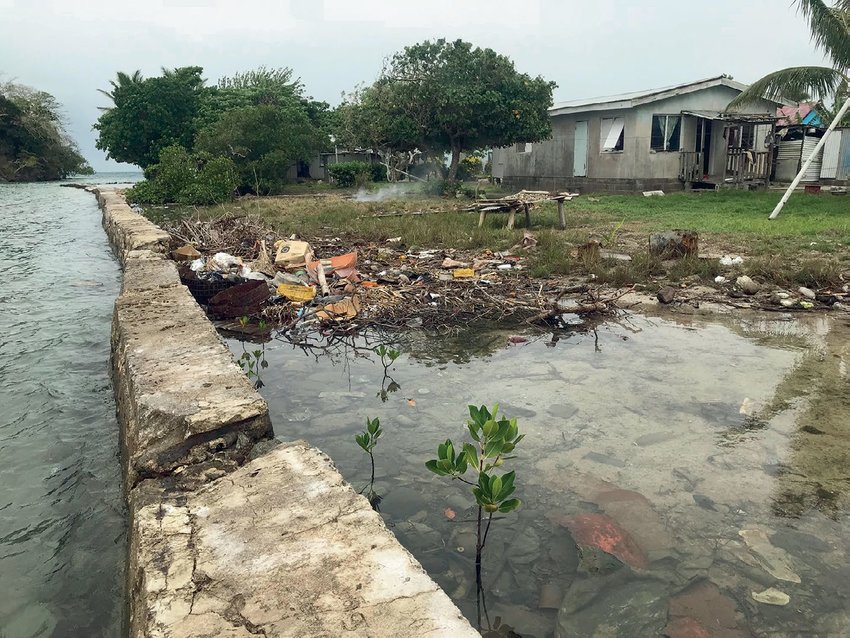
Fiji, a Pacific Island country, is liable to the effects of climate change, including sea level rise and coastal erosion. On Vanua Levu Island (the second largest island of Fiji), the island country built a seawall as an adaptation measure. However, it only caused coastal erosion to move further inland.adaptation project resulted in unforeseen negative effects and maladaptation. Researchers discovered that the seawalls’ principal goal of protecting people from coastal pressures had not been accomplished, and that instead, they had unintended negative effects on the security of Vanua Levu Island’s land and livelihoods [12].

The main issue is the inadequate design and construction of seawalls (Figure 5), which caused them to trap water along their landward sides, acting more like a dam. Approaches to adaptation measures that are poorly thought-out can result in forced relocation or retreat of communities. These may have detrimental effects on communities that are already struggling the hardest with climate change.

Figure 5: Example of maladaptation: A protective sea wall was constructed in Fiji to protect the settlement from sea-level rise, but designers overlooked the need to allow for stormwater drainage on the inside, leading to flooding in the community (Schipper, E. L. F., 2022) [14].

How to Avoid Maladaptation?

From the examples above, we can learn some of the good and poor adaptation measures experienced by communities in different parts of the world.  It is critical not to repeat past mistakes when implementing future adaptation strategies.

Studies show that maladaptation can be avoided by including all actors – from the grassroots, NGOs and governments – to be involved in each aspect of the adaptation project, starting from the planning process, implementation, and all the way to evaluation of the project [14]. This creates a holistic understanding of the adaptation process among practitioners and decision makers, and enables them to identify how the costs and benefits can be fairly distributed across all social groups.

Barnett and O’Neill (2010) highlight five different types of maladaptation that can arise, namely interventions that can increase emissions of greenhouse gases, burden the most vulnerable disproportionately, incur high opportunity costs, reduce incentives to adapt, or limit choices available for future generations.  The authors propose that this maladaptation could form the basis for the evaluation of decisions about adaptation and thus could be used as a fundamental checklist for practitioners on the ground before embarking on an adaptation project.

Another study further proposes an Assessment Framework that consists of eleven guidelines for avoiding maladaptation to climate change in coastal areas [15].  For practical reasons, the guidelines have been classified into environmental, sociocultural, and economic maladaptation which can be found  in Figure 6 below: 

Figure 6: The Assessment framework: eleven guidelines for avoiding maladaptation to climate change in coastal areas (Magnan, A., 2014).

Integrity and good governance in climate adaptation projects also play a major role in avoiding maladaptation.  Opportunities to make money, political agendas with short-term goals or non-transparent decision-making processes that exclude vulnerable groups, minorities, women and youth may all contribute to  flawed decision-making in adaptation projects [16]. Thus, greater transparency in project monitoring and inclusive participation in the decision-making process are sorely needed in any adaptation project.

Since there is no one adaptation strategy that can fit everywhere, understanding the environmental and socio-economic context of the adaptation project implementation area is critical.  For instance, what works in the Netherlands may not work in Fiji.  Failure to address the social, economic, environmental, ecological and political aspects without careful consideration of the interdependent systems in designing adaptation projects might result in maladaptation which can lead to disaster, economic loss, and disruption of social wellbeing.

References

  1. Barnett, J., & O’Neill, S. (2010). Maladaptation. Global Environmental Change, 20(2), 211-213.
  2. Morgan, E. A., Nalau, J., & Mackey, B. (2019). Assessing the alignment of national-level adaptation plans to the Paris Agreement. Environmental Science & Policy, 93, 208-220.
  3. Noble, I. R., Huq, S., Anokhin, Y. A., Carmin, J. A., Goudou, D., Lansigan, F. P., & Chu, E. (2014). Adaptation needs and options. In C.B. Field et al. (Eds.), Climate Change 2014: Impacts, Adaptation, and Vulnerability. Part A: Global and Sectoral Aspects. Contribution of Working Group II to the Fifth Assessment Report of the Intergovernmental Panel on Climate Change (pp. 833-868). Cambridge University Press.
  4. Schipper, E. L. F. (2020). Maladaptation: When adaptation to climate change goes very wrong. One Earth, 3(4), 409-414.
  5. Jongman, B. (2018). Effective adaptation to rising flood risk. Nature Communications, 9(1), 1986. https://doi.org/10.1038/s41467-018-04396-1
  6. Busscher, T., van den Brink, M., & Verweij, S. (2019). Strategies for integrating water management and spatial planning: Organising for spatial quality in the Dutch “Room for the River” program. Journal of Flood Risk Management, 12(1), e12448.
  7. Global Centre on Adaptation. (n.d.). 12 great examples of how countries are adapting to climate change. https://gca.org/12-great-examples-of-how-countries-are-adapting-to-climate-change/
  8. Pritchard, B., & Thielemans, R. (2014). “Rising waters don’t lift all boats”: A sustainable livelihood analysis of recursive cycles of vulnerability and maladaptation to flood risk in rural Bihar, India. Australian Geographer, 45(3), 325-339.
  9. Sweet, W. V., Kopp, R. E., Weaver, C. P., Obeysekera, J., Horton, R. M., Thieler, E. R., Zervas, C. E., & Zhai, A. R. (2022). Global and regional sea level rise scenarios for the United States: Updated mean projections and extreme water level probabilities along U.S. coastlines. NOAA Technical Report NOS 01. National Oceanic and Atmospheric Administration. https://oceanservice.noaa.gov/hazards/sealevelrise/noaa-nostechrpt01-global-regional-SLR-scenarios-US.pdf
  10. Kimmelman, M., & Haner, J. (2017, June 15). The Dutch have solutions to rising seas. The world is watching. The New York Times. https://www.nytimes.com/interactive/2017/06/15/world/europe/climate-change-rotterdam.html
  11. Huang-Lachmann, J. & Lovett, J. C. (2016). How cities prepare for climate change: Comparing Hamburg and Rotterdam. Cities, 54, 36-44. https://doi.org/10.1016/j.cities.2015.11.001
  12. Piggott-McKellar, A. E., Nunn, P. D., McNamara, K. E., & Sekinini, S. T. (2020). Dam(n) Seawalls: A Case of Climate Change Maladaptation in Fiji. In J. S. Dryzek, R. B. Norgaard, & D. Schlosberg (Eds.), The Oxford Handbook of Climate Change and Society (pp. 305-322). Oxford University Press. https://doi.org/10.1093/oxfordhb/9780199566600.013.17
  13. Schipper, E. L. F. (2022). Catching maladaptation before it happens. Nature Climate Change, 12(7), 617-618. https://doi.org/10.1038/s41558-022-01228-1
  14. Bertana, A., Clark, B., Benney, T. M., & Quackenbush, C. (2022). Beyond maladaptation: structural barriers to successful adaptation. Environmental Sociology, 8(4), 448-458. https://doi.org/10.1080/23251042.2021.2007567
  15. Magnan, A. (2014). Avoiding maladaptation to climate change: towards guiding principles. SAPI EN. S. Surveys and Perspectives Integrating Environment and Society, (7.1), 1-13. https://doi.org/10.4000/sapiens.1532
  16. Green Climate Fund, Independent Integrity Unit. (2021, November 4). Thematic Brief: Enhancing Integrity to Avoid Maladaptation. Retrieved February 11, 2023, from https://iiu.greenclimate.fund/documents/1226411/1238388/20211104-ThematicBrief-Maladaptation-A.pdf/83f30caa-64e8-c5e2-2933-0c8f141a8a9b
Fantastic Climate Adaptation Measures and Where to Find Them

Fantastic Climate Adaptation Measures and Where to Find Them

Written byAin Zahra binti Hisham, Elaine Tan Su Yin, Nurafiqah Mohd Sahar, Yong Sin Ng, Zhi Lin Yeoh

Edited by: Tan Zhai Yun (Nat), Felix Culas

Introduction

Photo by Wade Austin Ellis on Unsplash

The impacts of climate change are happening now.  This year alone, we have seen scorching heat waves and wildfires in Europe [1], deadly floods in Bangladesh [2], unusually heavy downpours in the arid region of Middle East, [3] and prolonged droughts in East Africa [4] . These events have killed thousands of people, displaced millions and left families on the brink of famine.  

Malaysia is not spared from climate change and is particularly vulnerable to flooding. The frequency and extremity of flood events in Malaysia are expected to increase in the next few decades, according to projections by scientists. 

The impacts of climate change will only intensify if we do not take action now.  Apart from doing everything we can to cut greenhouse emissions and slow the pace of climate change, we must adapt to the consequences of climate change to increase our resilience and protect our communities.  

The Malaysian government has mentioned that it plans to formulate a National Adaptation Plan, which will include a long-term action plan and strategies for various sectors.

What is Climate Adaptation?

Adaptation is one of the primary responses to climate change. In simple terms, adaptation means a response to a perceived risk or opportunity. According to the Intergovernmental Panel on Climate Change (IPCC):

Climate change adaptation is  an “adjustment in natural or human systems in response to actual or expected climatic stimuli or their effects, which moderates harm or exploits beneficial opportunities.”

These responses include changes in processes, practices, and structures to minimise potential damage or maximise potential beneficial opportunities associated with climate change.

There are inevitable effects of climate change that mitigation efforts cannot address. For example, planting trees alone is not enough to lower the Earth’s temperature. Some studies and models suggest that high carbon taxes have not effectively reduced CO2 emissions to the levels needed [5]

Countries and communities must adapt to climate change by developing and implementing relevant solutions. Adaptation solutions vary by location and are subject to climate risks that are unique to each place. The first step of climate change adaptation is to understand local risks and develop plans to manage them.

This article highlights some adaptation measures implemented in other countries. It also looks at what we can do to deal with the future effects of climate change in Malaysia.

Example of Adaptation Measures in Coastal Areas

[Sucharitakul, G. & Hardy, J., 2021]

Japan is a country surrounded by water. In 2018, Japan was recognised as the country most affected by weather-related disasters. Weather events such as typhoons and tsunamis result in severe damages because many industrial activities in Japan are located near coastlines[6]

Japan’s Ministry of the Environment (MOE) has listed possible adaptation measures based on projected climate change impacts. For example, Japan’s National Plan for Adaptation to the Impacts of Climate Change includes assessments of climate change impacts on tidal flats, saline wetlands, kelp beds and coral reefs. 

Additionally, the MOE encourages regional impact assessments. This is to integrate protection of ecosystems into local climate change adaptation plans. Natural ecosystems, such as mangroves and seagrass, help reduce the impact of waves and currents by acting as natural wave breakers. They function as the first line of defence against large waves in coastal areas.

This practice is relevant to Malaysia as the country has coastlines measuring around 4,500km. Mangrove ecosystems protect this coastline. 629,038 hectares of mangroves are found in Malaysia, with 60% in Sabah, 22% in Sarawak and the remaining 18% in Peninsular Malaysia. 

The structure of mangrove roots is able to prevent soil erosion whilst the mangrove ecosystem reduces the force of oncoming waves, thus preventing flooding. It is important to conserve mangroves to safeguard our biodiversity and coastal communities.

Photo by Timothy K on Unsplash

Malaysia has already lost more than half of its mangroves, resulting in loss of biodiversity such as cockles and clams[7]. Coastal communities are also affected by the loss of mangroves. They depend on this ecosystem to provide a livelihood through fishing. Beyond protecting the coastline, mangroves act as a carbon sink.  They absorb above five times more carbon compared to forests[10] .

Hence, by conserving the ecosystem of mangroves, it will not only benefit the environment but the economy and the surrounding community.  Conservation of the mangrove ecosystem is also a form of nature-based solution, which is defined as solutions that aim to create the greatest impact without compromising the environment and the economy. 

To illustrate the importance of mangroves and corals, think of the airbag in a car. The airbag (mangroves and corals) minimises the impact to your car (coastline) when a collision (high impact waves) occurs. 

Example of Adaptation Measures in Urban Areas

China is the country most affected by flooding in the past 20 years [11]. The Sponge City Concept (SCC) was first proposed by the Chinese government in 2012 as an adaptation measure to its flood risk.

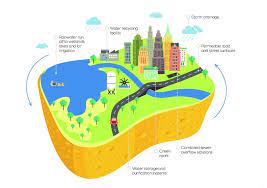
The SCC is an urban stormwater management concept. The city is capable of acting like a sponge that stores stormwater during the wet season and reuses it during the dry season. A sponge city is set up by reconstructing existing water and stormwater management systems and building green infrastructure for infiltration, absorption, storage and purification of stormwater in urban environments [12]. To simplify, SCC helps a city adapt to floods and droughts by improving the efficiency of existing stormwater drainage and irrigation systems, and utilising natural landscapes such as lakes and forested areas to slow down and store stormwater for future use.

[Infographic of the sponge city concept (Pattinson, 2021)]

Other than flood management, SCC also indirectly contributes to reduced carbon emissions and surface temperature in urban areas (urban heat island effect). A case study conducted in Xiamen, China, showed that expansion of urban blue-green infrastructures (blue elements such as rivers, canals, ponds, and green areas such as trees, parks and forests) and effective use of rainwater harvested from the sponge city reduced 66,266.7 tons of carbon emissions annually and cooled down the city’s surface temperature [13].

The sponge city concept shows developing countries how sustainable stormwater management can be implemented in rapidly urbanising regions.

[Noorshahrizam, 2022]

In Malaysia, the major floods between December 2021 and early January 2022 in Klang Valley resulted in a RM6.1 billion loss [14] and 55 fatalities [15]. The region has continued to experience flash floods every month since. This has caused massive anxiety among citizens, with some forced to evacuate and many more facing traffic congestion.

As a city built on the flood plain of the Klang River Basin, it is normal for the flat area adjacent to the river to experience flooding during periods of heavy precipitation. As a result, the rivers in the city were reconstructed into straighter, wider and deeper concrete channels that serve to transport stormwater into the ocean faster when the flow is heavy. 

However, rainfall intensity and frequency are getting more unpredictable and severe due to climate change. In addition, blue and green spaces that can help to retain rainwater and slow down the surface runoff of stormwater have been replaced with roads and buildings due to urbanisation. 

Blue-green spaces provide a porous surface for stormwater to filter (infiltrate) to the soil while moving through the surfaces. In contrast, concrete infrastructures prevent stormwater from filtering through the surface into the ground. As a result, the built infrastructures speed up the time taken for the stormwater to flow from the nearby surface into the river, making the area more prone to flooding as the river is unable to withstand a large amount of stormwater in a short time.

Currently, Malaysia still favours hard engineering approaches for stormwater management. The greatest example is the Stormwater Management And Road Tunnel (SMART) tunnel in the KL city centre. The tunnel helps to mitigate 45% of flood events in Kuala Lumpur [14]. The government is considering building another SMART tunnel in Shah Alam to mitigate future flooding in the city [16].

Beyond these, more sustainable measures must be taken. The city should plan adaptation measures for once-in-a-hundred-floods. Despite the name, these are expected to occur more frequently due to climate change [17]

A sponge city with blue-green areas can address another problem: the urban heat island (UHI)  effect. 

Source: Smart Tunnel

A study showed that land surface temperature in Kuala Lumpur increased by 1.64oC between 1989 and 2019 due to the urban heat island (UHI) effect. UHI Ipoh showed the largest increase in temperature of 6.75oC between 1998 and 2019 [18]. UHI is an effect where an urbanised area experiences higher temperatures than nearby areas due to land cover change. This happens when built infrastructure such as roads and buildings absorb and emit heat more than green and blue areas in the city.

In Kuala Lumpur, reduction in vegetation cover and land-use changes were the main causes of the UHI effect [19]. Vehicle traffic and air conditioning usage also contribute to increased temperatures [20].

A well-planned city with adequate blue-green areas such as Putrajaya has a lower UHI effect compared to other cities in Malaysia [19]. However, even well-planned cities can induce the UHI effect from their buildings.

The Malaysian government has proposed projects like China’s Sponge City to address flooding. The Kuala Lumpur City Hall and the Department of Irrigation and Drainage (DID) has plans to build an underground storage tunnel. It is designed to store flood water and release it into the river during low flow [21].

Additionally, DID is implementing a flood disaster risk assessment based on climate change projections. The assessment covers 36 major river basins in the country and is expected to be ready by 2024. These are critical efforts to develop and implement sustainable climate adaptation measures. 

Nevertheless, it is important to ensure these findings and data are shared among stakeholders, including the public and private sector, to encourage implementation of climate adaptation measures from different parties. For instance, it enables private sector players and individuals to make decisions on where to live, work and invest in assets according to the findings of the risk assessment. 

On the other hand, it is challenging to align the sponge city concept with ongoing urban planning and renovation portfolios. Successful implementation of the Sponge City Concept will require knowledge sharing among relevant stakeholders [22]. However, relevant stakeholders in Malaysia are often working in silos. 

For example, even while the KL City Plan recognises the importance of retention ponds and flood retention zones in mitigating floods, 6 retention ponds in KL were turned into development projects by the city hall, making the city more prone to flooding [23]. In addition, irrigation and drainage guidelines available for developers are not enacted with laws, making it hard to manage existing drainage systems for the holistic implementation of the sponge city concept in Malaysia [24]

Therefore, collaboration between stakeholders, including developers, the transportation sector, policymakers and the urban community is essential for the implementation of sustainable adaptation measures to address flooding and the UHI effect.

Social Adaptation Measures for Climate Change

A vital climate adaptation strategy to protect communities is to build climate-resilient education infrastructure and systems in climate-vulnerable countries [25]. For instance, Bangladesh is prone to super cyclones. In response, the country began implementing a cyclone warning and evacuation program [26]

In the past few decades, Bangladesh’s cyclone-tracking systems have improved significantly through satellite monitoring and early warning systems through radio and mobile phones, run by volunteers. In May 2020, when super cyclone Amphan hit the country, it resulted in fewer than 30 deaths. More than three million people on land received the warnings and were able to take shelter [26]

Moreover, primary schools in Bangladesh are being constructed to serve as cyclone shelters[26]. This is aimed at significantly reducing casualties from cyclones. The World Bank’s Multipurpose Disaster Shelters Project is helping to make the coastal population in Bangladesh less vulnerable to natural disasters through 552 new shelters, 450 rehabilitated shelters, and about 550 kilometres of new rural roads. Moreover, the project is supporting community-based early warning initiatives and the shelters are fitted with solar panels and rainwater-harvesting devices [26]

Meanwhile, in Malaysia, we are constantly faced with extreme weather events, heavy rainfall and flash floods. Recently, Malaysia’s Ministry of Federal Territories announced plans to review, establish and upgrade the early warning system by using SMS blasting to inform the public of weather events quicker and more accurately to minimise damage and fatalities caused by unexpected calamities. Although Malaysia is not affected by the cyclones, the solution practised by Bangladesh is worth learning from. It has proven that building community resilience can significantly improve adaptation strategies and minimise the effects of climate change. 

Call to Action

Everyone must recognise the importance of climate adaptation to reduce Malaysia’s vulnerability to the harmful effects of climate change. To recognise is to learn, acknowledge, observe and take action. In times of crisis, it is vital that we speak up. A modest first step is to send emails to our Members of Parliament (MP), who are supposed to speak on our behalf in the parliament. The link below will bring you to a video from Youths United for Earth (YUFE). It shows how you can  contact your respective MPs. Click here[27] for a template of the letter.

Some topics to consider writing in your letter:

  • Your experience dealing with climate change impacts
  • The urgent need for climate adaptation in your area of observation
  • Your own suggestions on climate adaptation measures

At the end of the day, we need to elevate the voices of the people on matters that affect them. Through our research on successful climate adaptation measures in other countries, we hope this catapults you to participate more actively in efforts to adapt to climate change.

References

(Introduction)

1. Ataman, J. J. H. (2022, July 19). Europe’s heatwave: UK sees third-hottest day on record, wildfires rage in France and Spain. CNN. https://edition.cnn.com/2022/07/18/weather/europe-uk-heatwave-wildfires-france-spain-intl/index.html 

2. Mahmud, F. (2022, June 22). Bangladesh floods: Experts say climate crisis worsening situation. Floods News | Al Jazeera. https://www.aljazeera.com/news/2022/6/22/bangladesh-floods-experts-say-climate-crisis-worsening-situation 

3. Al Jazeera. (2022, July 23). Flash floods kill at least 22 people in southern Iran. Climate Crisis News | Al Jazeera.

4. https://www.aljazeera.com/news/2022/7/23/flash-floods-kill-at-least-21-people-in-southern-iranOstasiewicz, A. E. J. B. (2022, May 14). East Africa drought: “The suffering here has no equal.” BBC News. https://www.bbc.com/news/world-africa-61437239

(What is climate adaptation)

5. C. Stokes, L., & Mildenberger, M. (2020, September 24). The trouble with carbon pricing. Boston Review. https://bostonreview.net/articles/leah-c-stokes-matto-mildenberger-tk/

(Example of Adaptation Measures in Coastal Areas)

6. Eckstein, D., Künzel, V., Schäfer, L., Winges, M. (2020). Global Climate Risk Index 2020. German Watch.

7. https://germanwatch.org/en/17307A.A Amir. (2018, March 11). On our love affair with Malaysian mangroves. New Straits Time. https://www.nst.com.my/opinion/columnists/2018/03/343971/our-love-affair-malaysian-mangroves

8. Yoshioka, N. (2021). Adaptation to Climate Change in Ocean and Coastal Areas. Ocean Policy Research Institute, Perspective no 23.

9. WWF. (2008). Climate impacts are threatening Japan today and tomorrow. Nippon Changes – Report.

10. Sucharitakul, G. & Hardy, J. (2021, July 26). A threat and a solution – tourism’s role in mangrove protection. Climate Champions. https://climatechampions.unfccc.int/a-threat-and-a-solution-tourisms-role-in-mangrove-protection/

11. Gjisman, R, Horstman, E.M., Van Der Wal, D., Friess, D.A., Swales, A., Wijnber, K.M. (2021). Nature-Based Engineering: A Review on Reducing Coastal Flood Risk With Mangroves. Frontiers in Marine Science, 8 July 2021. 

12. Shahamin, F.M.M., Mubarak, T.H., Khairany, N.M.A., Zahirah, M.T. (2020). Album Pengenalan Species Bakau. Selangor. Institut Penyelidikan Perhutanan Malaysia (FRIM). 2020.

(Example of Adaptation Measures in Urban Areas)

13. United Nations Office for Disaster Risk Reduction. (2020). The human cost of disasters: An overview of the last 20 years (2000-2019). https://www.undrr.org/publication/human-cost-disasters-overview-last-20-years-2000-2019

14. Griffiths, J., Chan, F. K. S., Shao, M., Zhu, F., & Higgitt, D. L. (2020). Interpretation and application of Sponge City guidelines in China. Philosophical Transactions of the Royal Society A: Mathematical, Physical and Engineering Sciences, 378(2168), 20190222. https://doi.org/10.1098/rsta.2019.0222 

15. Shao, W., Liu, J., Yang, Z., Yang, Z., Yu, Y., & Li, W. (2018). Carbon Reduction Effects of Sponge City Construction: A Case Study of the City of Xiamen. Energy Procedia, 152, 1145–1151. https://doi.org/10.1016/j.egypro.2018.09.145 

16. Mageswari, M. (2022, February 12). SMART TUNNEL MITIGATES 45% OF KL FLOODS. The Star. https://www.thestar.com.my/news/nation/2022/02/12/smart-tunnel-mitigates-45-of-kl-floods 

17. Zainal, F. (2022, March 8). Floods: 55 fatalities from December 2021 to January 2022The Star. https://www.thestar.com.my/news/nation/2022/03/08/floods-55-fatalities-from-december-2021-to-january-2022 

18. Krishnan, D. B. (2022, February 4). More Smart tunnels to be built in Shah Alam, major cities to tackle flood woes. NST Online. https://www.nst.com.my/news/nation/2022/02/768698/more-smart-tunnels-be-built-shah-alam-major-cities-tackle-flood-woes 

19. Arnell, N., & Gosling, S. (2014). The impacts of climate change on river flood risk at the global scale. Climatic Change, 134(3), 387-401. doi: 10.1007/s10584-014-1084-5  

20. Think City. (2021, March 5). Think City Land Surface Temperature Mapping Shows Malaysian Cities are Getting Hotter. Think City. https://thinkcity.com.my/news/think-city-land-surface-temperature-mapping-shows-malaysian-cities-are-getting-hotter/  

21. Ramakreshnan, L., Aghamohammadi, N., Fong, C. S., Ghaffarianhoseini, A., Ghaffarianhoseini, A., Wong, L. P., Hassan, N., & Sulaiman, N. M. (2018). A critical review of Urban Heat Island phenomenon in the context of Greater Kuala Lumpur, Malaysia. Sustainable Cities and Society, 39, 99–113. https://doi.org/10.1016/j.scs.2018.02.005 

22. Wang, K., Aktas, Y. D., Stocker, J., Carruthers, D., Hunt, J., & Malki-Epshtein, L. (2019). Urban heat island modelling of a tropical city: Case of Kuala Lumpur. Geoscience Letters, 6(1), 4. https://doi.org/10.1186/s40562-019-0134-2

23. Bernama. (2022, June 3). KL to get underground storage tunnel to prevent flash floods. Free Malaysia Today (FMT). https://www.freemalaysiatoday.com/category/nation/2022/06/03/kl-to-get-underground-storage-tunnel-to-prevent-flash-floodskuala-lumpur-to-get-underground-storage-tunnel-to-prevent-flash-floods/ 

24. Zevenbergen, C., Fu, D., & Pathirana, A. (2018). Transitioning to Sponge Cities: Challenges and Opportunities to Address Urban Water Problems in China. Water, 10, 1230. https://doi.org/10.3390/w10091230  

25. Free Malaysia Today. (2021, December 28). 6 retention ponds in KL earmarked for development, says MP. Free Malaysia Today (FMT). https://www.freemalaysiatoday.com/category/nation/2021/12/28/6-retention-ponds-in-kl-alienated-for-development-says-mp/ 

26. Harun, H. N. (2022, June 2). Putrajaya good example of “sponge city” to avoid floodingNST Online. https://www.nst.com.my/news/nation/2022/06/801681/putrajaya-good-example-sponge-city-avoid-flooding 

(Social Adaptation Measures for Climate Change) 

27. Weaver, J. (2021, February 22). Education and climate change – are we addressing the linkages? World Bank Blogs. https://blogs.worldbank.org/climatechange/education-and-climate-change-are-we-addressing-linkages 

28. Huq, S. (2022, March 1). Adapting to Climate Change: Lessons from Bangladesh. Scientific American. https://www.scientificamerican.com/article/adapting-to-climate-change-lessons-from-bangladesh/

(Call to Action) 

29. Youths United for Earth (YUFE). (n.d.). General Template Letter – Email MPs. https://www.yufemy.com/