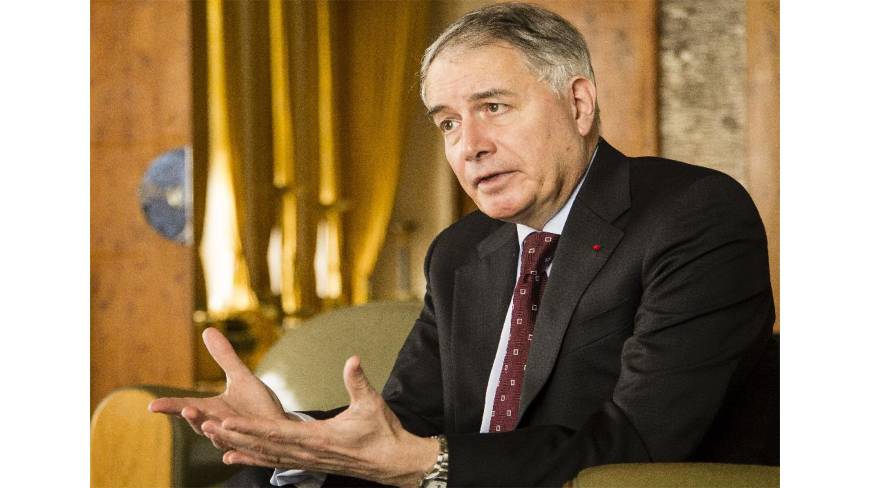
Philippe Zeller, France’s Ambassador at large for climate change, Asia and Oceania.
Philippe Zeller, France’s Ambassador at large for climate change, Asia and Oceania.
The December UN Climate Change conference in Paris offers a last chance to reach a deal that would keep global warming from reaching risky levels, says UN climate chief Christiana Figueres. But with greenhouse gasses projected to rise to more than 4 Celsius, can countries even make the necessary cuts? And how will the Paris talks succeed when previous conferences have failed to come up with any concrete pledges? Here to answer these questions is France’s Ambassador at large for climate change for Asia and Oceania, Philippe Zeller.
Original Podcast : http://www.bfm.my/philippe-zeller-what-next-at-the-december-climate-change-talks.html
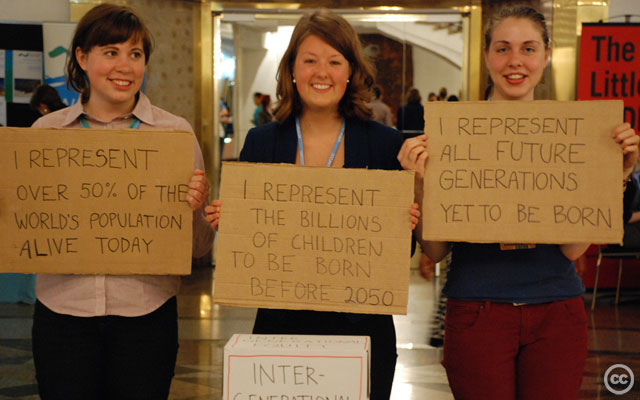
More often than not, youths are perceived to be incapable, illiterate and immature to be able to make proper decisions. However, one particular youth organization network called YOUNGO is the group that you can entrust to make informed decisions in the UNFCCC intergovernmental process. This is the bunch of youths who holds true to being the guardian of our planet earth and will stand strong in protecting it for the future generation. Each and every YOUNGO member do not simply represent a single nation but they represent the global youth community fighting against climate change as a unity.
Photocredits by tcktcktck.org
“I represent all future generations yet to be born.”
“I represent the billions of children to be born before 2050.”
“I represent over 50% of the world’s population alive today.”
So please do not neglect us.
Continue reading to learn more about YOUNGO, the official youth constituency at UNFCCC.
Youth (Children and young people) are believed to be the key players in reaching innovative, inspiring and ambitious climate change solution. In fact, youth have been actively involved in the United Nations Framework Convention on Climate Change (UNFCCC) since COP 5 in Bonn.
To date, the idea of youth constituency status was first discussed at COP10 in Buenos Aires. Prior to Conferences of Parties (COP 15), the secretariat granted a provisional observer constituency status to admit youth non-governmental organisations (YOUNGO). As per definition by the UNFCCC secretariat, constituency has a functional role in the climate change negotiation process as a management tool. This status allow youth not only to strengthen their presence during negotiations process but also take part in it as a stakeholder. To make thing clear, YOUNGO is not an organisation but rather an official youth constituency status in UNFCCC. The objective of YOUNGO is youth empowerment
As a constituency, YOUNGO is given the opportunity to address the plenary and high level segment of a COP/CMP. YOUNGO have additional privileges to make official statements and provide technical and policy inputs to negotiation groups during the plenaries. They also invited to attend workshops taking place in between sessions and meet with officials of the Convention such as Chairs of the subsidiary bodies and the COP Presidency.
YOUNGO play an important role in becoming the conduit for the exchange of official information between youth and the secretariat. Focal points are representatives in charge of communicating with the secretariat of the UNFCCC on behalf of youth during negotiation. Besides, YOUNGO assisted the secretariat in ensuring an effective youth participation to an intergovernmental meeting. Besides, it also promote youth participation in specific projects at the local and national levels such as education, mitigation, adaptation and technology transfer. It also coordinated young people’s interaction at sessions including convening constituency meetings, organising meetings with officials, providing names for the speakers list and representation at official function
Starting in COP 11/CMP 1, youth have organised meetings called “Conferences of Youth (COY)” prior to the sessions of the COP/CMP. The annual COY provides a solidarity platform to bring young people from around the world to learn about UNFCCC, building networks and equip themselves in building capacity in participating in the UNFCCC negotiation process. COY is the main summit of the YOUNGO constituency. COY 11 will be held at 26th November 2015
Aside from COY, the youth continue to engage in the negotiation process through various activities. YOUNGO co-organises Young and Future Generation’s Day during the COP/CMP which will feature a series of youth-led events, exhibits, interviews, media stunts and etc. These events provide opportunities for the youth to showcase their project implemented, present a report they have written and even performing arts.
Last but not least, youth participation has brought moral and equity based values as well as transparency to the negotiations.
In a few more months, the Intended Nationally Determined Contributions (INDCs) will determine how we move forward to address climate change as a nation. You may be thinking, how is dealing with climate change more important that dealing with the issue of corruption and political unrest in this country. This is because by the end of the upcoming UNFCCC happening this December, it will be a world-wide effort or rather a long term global effort to resume the responsibility in protecting our planet earth and achieve a sustainable future. Nonetheless, with the understanding that, you may still have the opinion of there are other issues more in need of our country’s attention, the only thing implied here is that this INDCs that our nation will submit publicly SHOULD NOT be taken lighter than the issue on corruption and political unrest.
Get your explanation on INDCs in the articles below by Amalen Sathananthar and Mohammad Shakirin Bin Shahrul Jamal.
In preparation to create a new international climate agreement via the United Nation’s Framework Convention on Climate Change (UNFCCC) Conference of the Parties (COP21) in Paris in December 2015, participating countries, parties have agreed to publicly outline what post-2020 climate actions they intend to take under a new international agreement, known as their Intended Nationally Determined Contributions (INDCs). The INDCs will largely determine whether the world achieves an ambitious 2015 agreement and is put on a path toward a low-carbon, climate-resilient future. All INDCs submitted to the Secretariat by October 1st will be included in a synthesis report prepared by the UNFCCC Secretariat that will be released by November 1st. The report will reflect the aggregate emissions impact of available INDCs ahead of COP21.
What exactly is it?
A country’s INDC indicates to the world that the country is doing its part to combat climate change and limit future climate risks. In their INDCs, UNFCCC Parties are requested to outline the steps they are taking/will take to reduce emissions at the national level. Most INDCs pairs national policy-setting and a global framework to determine their collective contributions in the context of their national priorities, circumstances and capabilities towards a low-carbon, climate-resilient future.
It is important that countries follow a transparent process when preparing their INDC in order for the trust and accountability with domestic and international stakeholders be built. A good INDC should be ambitious, leading to transformation in carbon-intensive sectors and industry; transparent, so that stakeholders can track progress and ensure countries meet their stated goals; and equitable, so that each country does its fair share to address climate change. Essentially, INDCs must be clearly communicated so that domestic and international stakeholders can anticipate how these actions will contribute to global emissions reductions and climate resilience in the future.
Well, you see, all nations involved in the COP21 in Paris 2015, they should prepare and submit their INDCs before the Conference. On 3rd of July 2015, our close neighboring country, Singapore submitted their Climate Action Plan along with other countries such as Switzerland, Russia, Andorra, Mexico, Liechtenstein, Serbia, New Zealand, Republic of Korea, Morocco and many others. With that said, Malaysia certainly won’t want to be left behind.
Well-designed INDCs will signal to the world that the country is doing its part to combat climate change and limit future climate risks. Countries should follow a transparent process when preparing their INDC in order to build trust and accountability with domestic and international stakeholders. A good INDC should be ambitious, leading to transformation in carbon-intensive sectors and industry; transparent, so that stakeholders can track progress and ensure countries meet their stated goals; and equitable, so that each country does its fair share to address climate change. It is important that INDCs be clearly communicated so domestic and international stakeholders can anticipate how these actions will contribute to global emissions reductions and climate resilience in the future.
An INDC should also articulate how the country is integrating climate change into other national priorities, such as sustainable development and poverty reduction, and send signals to the private sector to contribute to these efforts.
What is World Resources Institute (WRI) doing on this topic?
WRI is working on a variety of projects that aim to assist governments in preparing INDCs and help stakeholders understand and evaluate INDCs:
The Open Climate Network is working with partners in eight focus countries to evaluate current emissions trends and abatement potential out to 2030, with a view to informing initial INDCs. Following the release of the INDCs, OCN and its partners will evaluate mitigation pledges based on insights from the GHG Protocol and other tools. This data will provide critical information to decision-makers in the world’s largest economies that will enable the development of ambitious GHG reduction targets in their INDCs.
In partnership with the UNDP, WRI is working on an INDC guidance document that will support the detailed design and preparation of INDCs, including for mitigation and adaptation components and explanations of fairness and ambition.
WRI also works on INDCs through our Open Book initiative that enhances INDC transparency. The ACT 2015 project works to catalyze agreement at COP21, including the ways in which countries’ commitments and other actions from their INDCs are finalized and linked to the 2015 agreement. Our CAIT Paris Contributions Map tracks and analyzes INDCs as countries submit them.
If this INDCs will determine the future of Malaysia, perhaps we need to stand up and voice out our opinion on in direction Malaysia should progress. We should make sure that this matter is taken seriously to ensure that Malaysia will be put on the right path forward rather than continue to regress.
#MYD Training Series – Training on UNFCCC negotiations and media work with various climate experts, government bodies and civil society leaders, from July until Nov 2015. Each sessions will run for 2 hours and will be broadcast live on Google Hangout. Hangout will be available on YouTube for future reference.
Gan Pei Ling (Journalist and Analyst) – Media and Policy Training
Malaysia is a party in United Nation Framework Convention of Climate Change (UNFCCC) to combat climate change. However, the voices from the youth are often unheard and not taken into account in national policy making. Reference to Article 6 in UNFCCC, (a(iii) public participation in addressing climate change and its effects and developing adequate responses), we foresee the importance of getting the involvement of public especially youth in climate change negotiation process for a better future.
A series of training is designed to effectively provide the exposure to the UNFCCC processes with the active stakeholders. The list includes, Malaysian Negotiator, Guardian’s top young campaigners to watch in the lead up to COP21, award winning journalists, producers, editors and many more.
#MYD – Malaysian Youth Delegation – Malaysian youth climate movement at international United Nations climate conferences, UNFCCC, participants will be mentored and hold engagements with various climate expert bodies and dialogue with Malaysian policy makers and negotiators.